Front Walkway Ideas: How to Create a Better Entrance to Your Home
Your front walkway does more than lead people to the door. It shapes how the entrance feels, influences how easily people move through the property, and plays a major role in the overall appearance of your front yard.
A well-designed walkway should feel like it belongs with the home. Its width, shape, materials, grading, surrounding landscaping, and connection to the driveway or sidewalk all contribute to how well the entrance works.
If you're planning a new front walkway or replacing an existing one, thinking beyond the pavers themselves can result in an entrance that looks better and functions properly for years.
Start With How People Actually Approach the House
One of the first things to consider is the route people naturally take to your front door.
A walkway can look attractive on paper but feel awkward if it forces people to make unnecessary turns or doesn't connect logically with the driveway, sidewalk, or parking area. Guests should be able to understand where they're supposed to go without thinking about it.
The path should also provide enough room for comfortable movement. Narrow entrances can feel cramped, especially when people are carrying bags, walking side by side, or navigating around snowbanks in winter.
Good design considers these practical details early. A thoughtful
landscape design looks at how the different areas of the property connect rather than treating the walkway as an isolated feature.
Use Mulch to Protect the Root Zone
Mulch can be valuable heading into winter, particularly around younger trees.
A properly applied layer helps retain soil moisture and provides insulation around the root zone as temperatures change. The key is applying it correctly.
The City of Toronto notes that mulch helps insulate soil during winter while also helping maintain moisture around newly planted trees. It recommends keeping mulch away from direct contact with the trunk and warns that excessive mulch can create moisture and root problems.
Think of mulch as protection for the soil and roots, not insulation that needs to be piled around the trunk. A relatively simple fall task can become harmful when mulch is applied too deeply or mounded against the tree.
Accessibility principles can also provide useful guidance when thinking about comfortable movement. Ontario's recommendations for
creating accessible paths of travel emphasize factors such as clear routes, stable surfaces and manageable changes in elevation. While requirements for public spaces aren't automatically residential walkway requirements, the underlying design considerations can still help create a more comfortable entrance.
Choose a Width That Fits the Entrance
Walkway width has a surprisingly large effect on how an entrance feels.
A narrow path may be enough to physically reach the door, but it can make a larger front entrance feel undersized. A wider walkway can create a stronger sense of arrival and provide more room for people to comfortably pass or walk together.
The proportions should make sense for the house and property. A modest entrance doesn't necessarily need an oversized path, while a large porch, wide staircase, or prominent front door may benefit from a more substantial approach.
Transitions matter too. If the walkway meets a set of stairs or a front landing, the connection should feel deliberate rather than suddenly narrowing, widening, or changing direction.
Straight Doesn't Always Mean Better
A straight walkway can create a clean, direct entrance, but it isn't the only option.
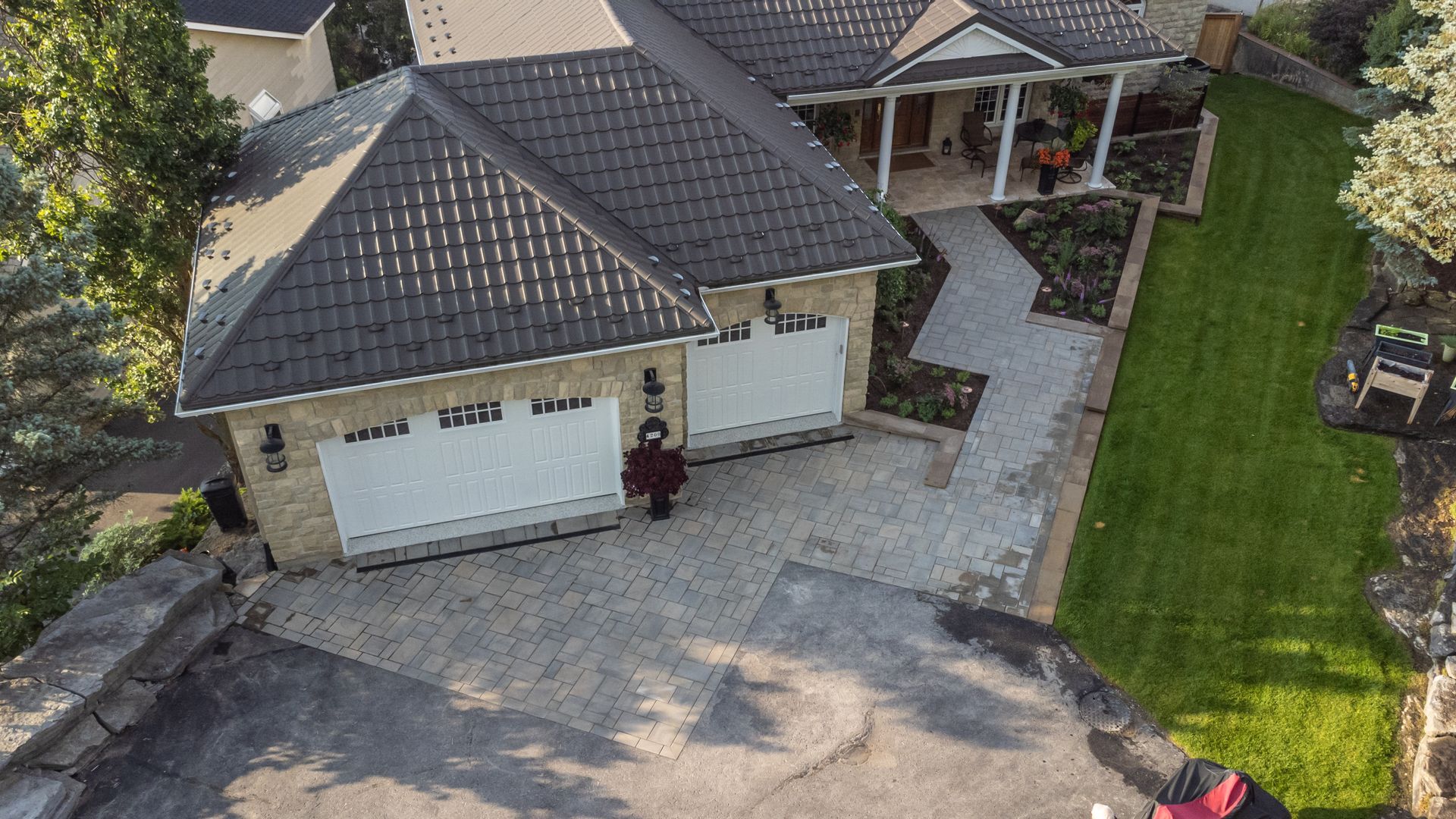
A slight curve can work well when the property has garden beds, mature trees, grade changes, or an entrance that doesn't align directly with the driveway. The important part is having a reason for the shape.
Curves that are added simply for decoration can make a short walk feel unnecessarily complicated. On the other hand, forcing a perfectly straight path through a property where the natural movement pattern suggests something different can make the entrance feel disconnected.
The shape should respond to the home, terrain and surrounding landscape.
Think About Drainage Before Choosing the Finishing Details
A front walkway is constantly exposed to rain, melting snow and freeze-thaw conditions. That makes drainage one of the most important parts of the design.
Water shouldn't consistently collect on the walkway or be directed toward the foundation. Proper elevations, grading and base preparation all influence how the finished surface performs.
The City of Toronto recommends considering porous paving for walkways and patios as one way to allow rainwater and snowmelt to soak into the ground rather than contributing entirely to surface runoff.
The right solution depends on the site. Permeable materials won't correct every drainage problem, and surface material alone can't compensate for poor grading underneath.
Water movement needs to be considered as part of the entire installation.
Select Materials for More Than Appearance
Colour and style matter, but walkway materials also need to perform.
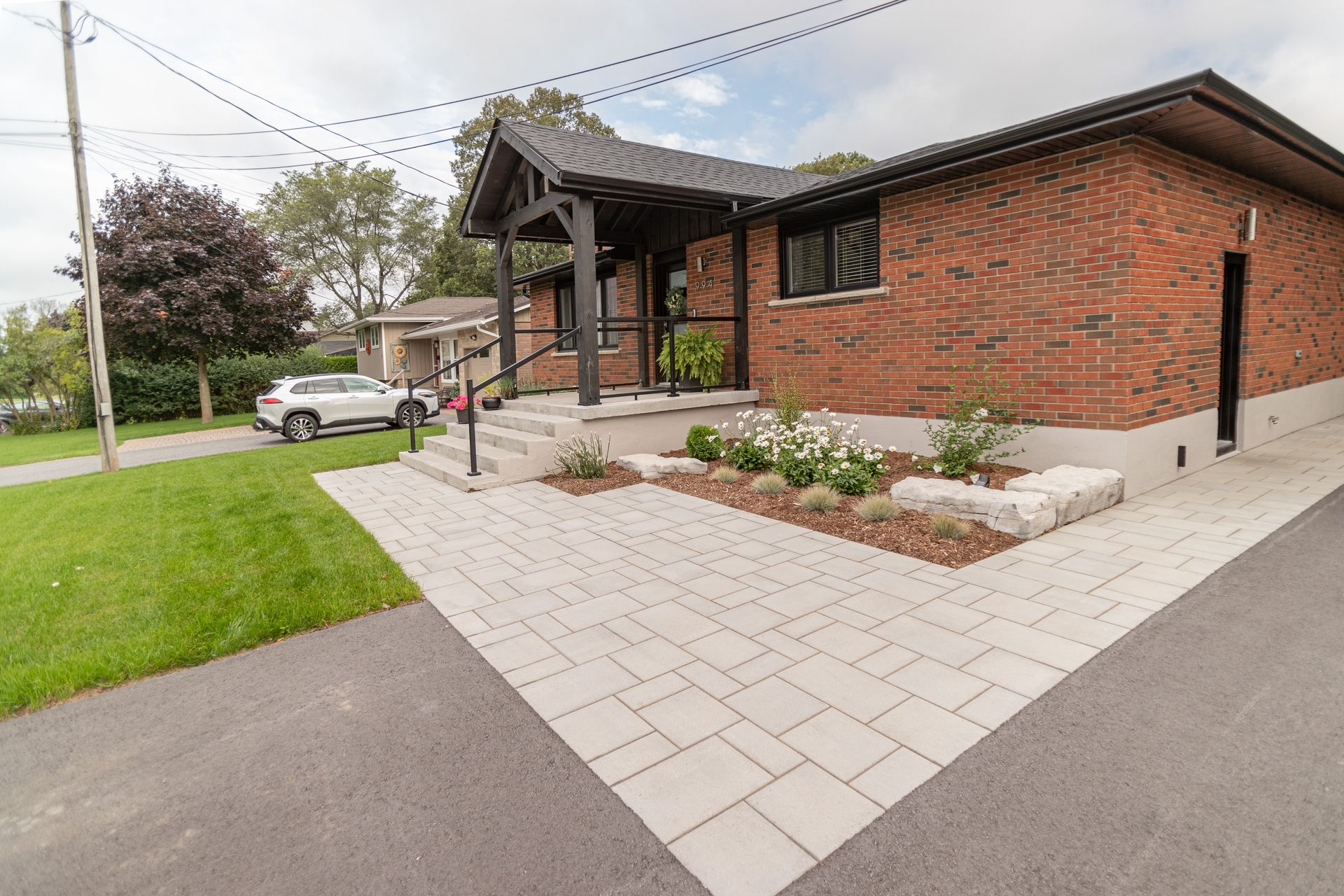
Interlocking pavers are a popular choice because they offer a wide range of shapes, textures and patterns while creating a durable surface when installed on a properly prepared base. Natural stone can provide a different character, while other paving systems may be better suited to particular architectural styles or drainage goals.
Permeable paving is another option in appropriate applications. The City of Toronto describes permeable interlocking concrete pavers as systems that allow water to move through openings between the pavers and into the aggregate layers beneath the surface.
Whatever material you choose, the walkway should complement the home instead of competing with it. Looking at brick, siding, stonework, roofing, porch finishes and the driveway can help narrow down colours and textures that feel cohesive.
Don't Overlook What's Beneath the Walkway
Some of the most important parts of a walkway disappear once construction is complete.
Excavation depth, base material, compaction and grading all contribute to long-term stability. If the foundation beneath the pavers isn't prepared correctly, even an expensive surface material can eventually shift or settle.
This becomes particularly important in Ontario, where seasonal freezing and thawing put outdoor surfaces through repeated movement.
Proper hardscaping installation for patios and walkways accounts for the structure beneath the finished surface as well as the appearance above it.
A walkway that's built properly from the beginning is easier to appreciate years later when the surface is still stable and the entrance continues to function as intended.
Use Planting to Soften the Entrance
Hardscaping establishes the route to the house, but the surrounding landscaping determines how naturally it fits into the property.
Garden beds can soften the edges of a walkway and create a gradual transition between stone and lawn. Plants can also add colour, texture and seasonal interest to an area that's otherwise dominated by hard surfaces.
Scale is important. Plants beside a walkway shouldn't constantly spill into the walking area or become obstacles as they mature. Selecting plants based on their eventual size helps prevent an entrance from becoming crowded a few years after installation.
Spacing also matters near steps and transitions where clear visibility is especially useful.
Consider Lighting as Part of the Design
A front walkway needs to work after sunset too.
Pathway lighting can help define the route to the entrance, make steps and changes in elevation easier to see, and highlight nearby landscaping or architectural details.
The goal isn't to line the walkway with as many fixtures as possible. Strategic placement usually creates a more polished result.
Integrated outdoor pathway lighting can improve visibility while helping the entrance feel welcoming after dark.
Lighting is easiest to plan before the surrounding landscaping is complete, particularly when wiring or fixtures need to be incorporated into garden beds and hardscape areas.
Make the Front Door Feel Like the Destination
The walkway should become more intentional as it approaches the house.
A landing that's too small can make the entrance feel crowded, especially when several people arrive at once or the front door swings outward into the usable space. Steps should also feel appropriately scaled to the walkway and entrance.
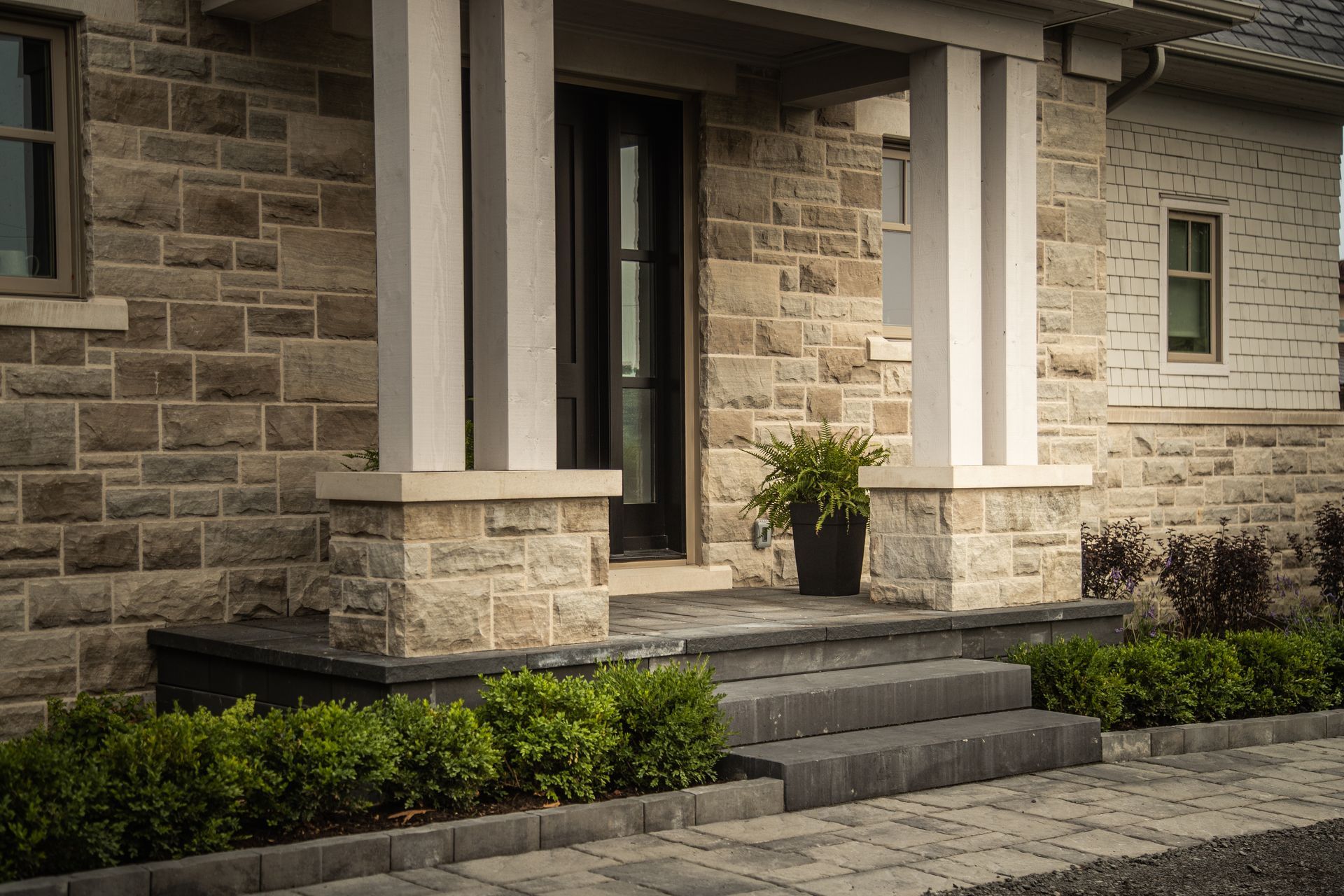
Changes in paver pattern, borders, planting, lighting, or a slightly wider landing can help visually establish the front door as the destination without making the design overly complicated.
These details are particularly effective when they're repeated elsewhere in the landscape. A border colour used in the driveway, for example, might also appear in the walkway or landing to tie the front yard together.
Make the Front Door Feel Like the Destination
Improving a front entrance doesn't always require redesigning the entire property.
Because the walkway connects so many elements of the front yard, changing its layout, width, materials, surrounding planting, or lighting can have a noticeable effect on the property as a whole.
The strongest front walkway ideas aren't simply about choosing an attractive paver. They consider how people approach the house, how water moves across the property, how the walkway will perform through Kingston's seasons, and how the finished entrance relates to the architecture and surrounding landscape.
When those details are planned together, the walkway becomes more than a path to the door. It becomes an intentional part of the home's entrance.