
Interlock Patios in Kingston
Patios for long dinners, quiet mornings and everything in between, built to come through Kingston winters looking the way they did on day one.
Built From the Base Up
A Patio Is Only as Good as What’s Underneath It
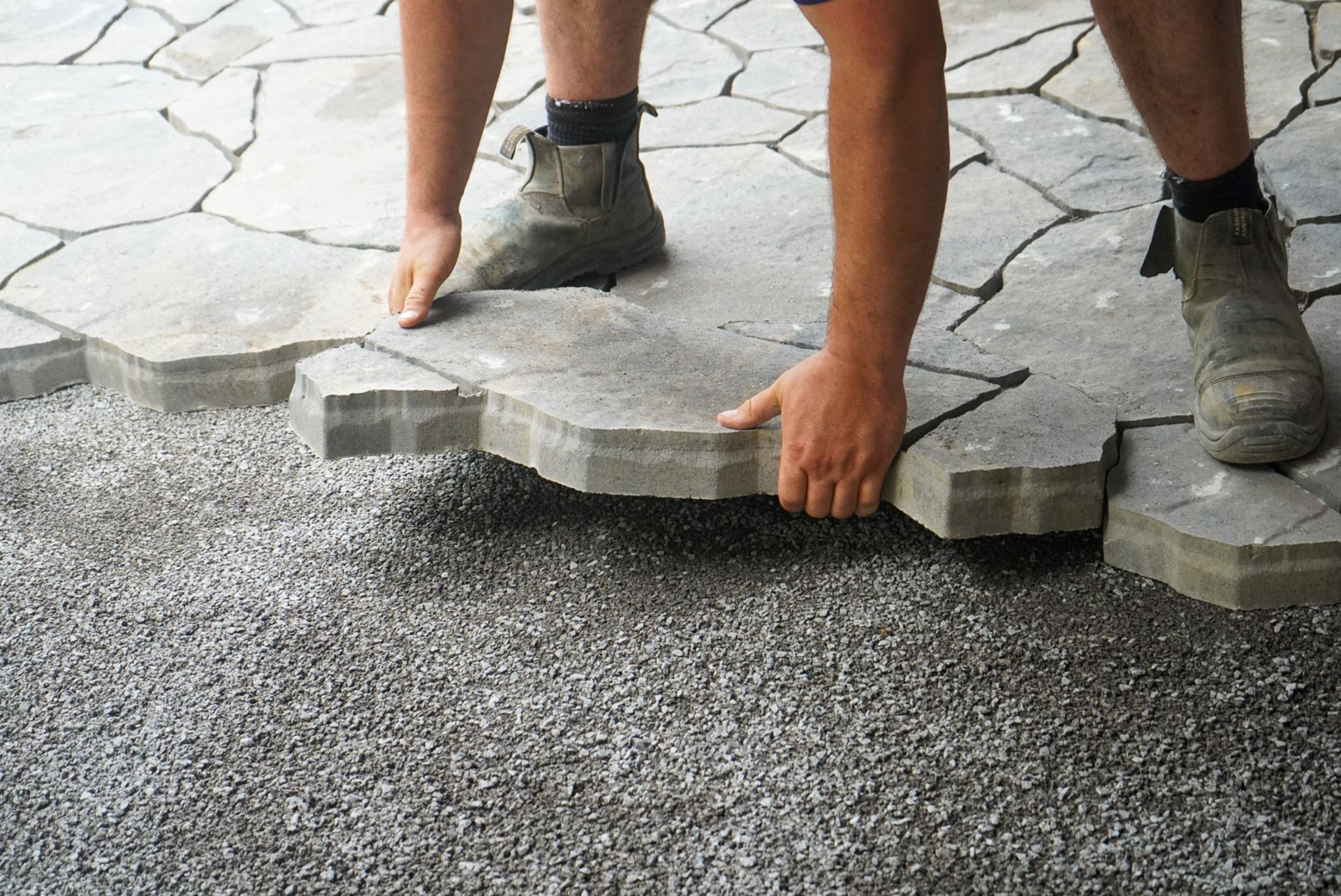
Most patios that sink, heave or wobble were let down by the base, not the stone. Kingston's freeze-thaw cycles find every shortcut, so we treat the layers below your pavers as the most important part of the job.
Mark trained at Humber College and holds ICPI certification for interlocking concrete pavement installation. He has been building patios around Kingston since 2014, and every patio we build gets the same careful groundwork.
- Excavation to the depth your soil and use call for
- Compacted granular base, placed in layers
- A gentle slope that carries water away from your house
- Solid edge restraint so pavers can't creep outward
- Polymeric joint sand to lock pavers and discourage weeds
Ideas for Your Yard
Patios Designed Around How You Live
We start with how you want to use the space, then choose the shape, size and materials to suit.
Dining patios
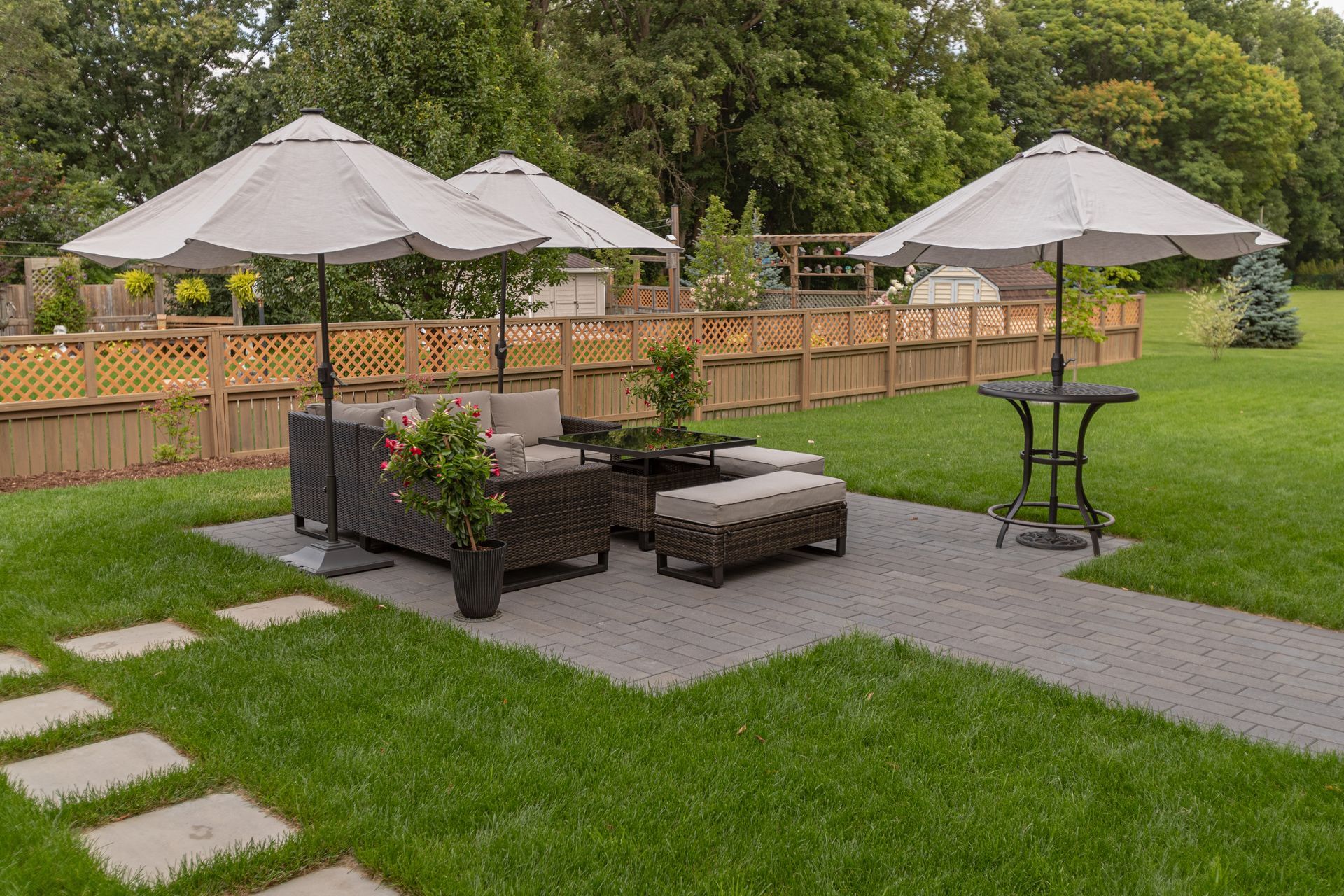
Room for the table, the chairs pulled out and a clear path past both, sized for the way you entertain.
Lounge and fire pit areas
A relaxed spot for evenings outside, with seating and space to move around safely.
Raised patios and seat walls
Where the yard slopes, a low wall can level the ground and double as extra seating. See our retaining walls page.
Pool surrounds
Slip-resistant pavers and coping that frame the pool and keep water moving away from it.
Natural stone accents
Flagstone, steppers and stone borders that soften a paver design and add texture.
Patio lighting
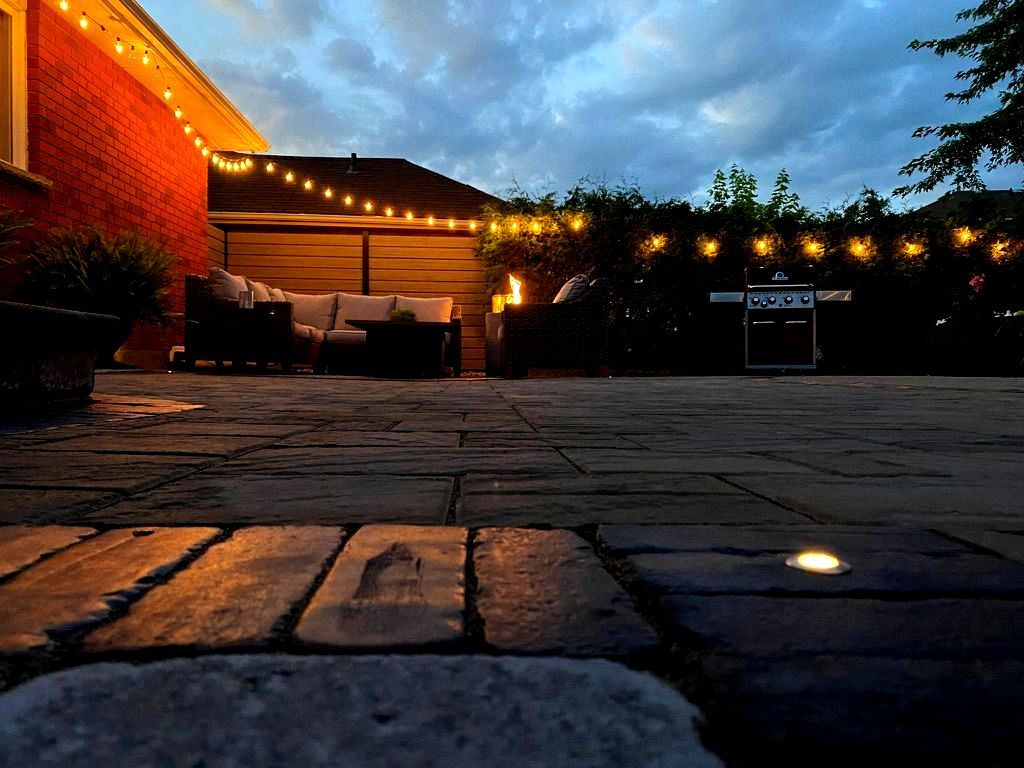
Path, step and accent lighting so the patio stays useful after the sun goes down.
Our Process
From First Visit to First Dinner Outside
Walk the yard
We look at sun, slope, drainage and access, and talk through how you picture using the space.
Design and materials
We map out the layout and help you choose pavers, colours and borders that suit your home.
Build the base
Old material comes out, then the base goes in and is compacted layer by layer.
Lay and finish
Pavers are laid, cut cleanly, restrained at the edges and locked in with joint sand. Then we walk the finished patio with you.
Kind Words
“Mark created a beautiful stone patio in the back yard! From the beginning, Mark demonstrated a very professional and down to earth approach. He was very attentive from the early design phase, to the selection of quality products, and through to installation for a great end result. The patio is the perfect size for the back yard!”Karen Moran
Planning Tips
Questions to Think About Before You Build
Where does the sun land?
A west-facing patio is lovely at dinner and hot at 4 p.m. Shade from trees, the house or a pergola changes how often you'll use it.
How does water move?
Look at where puddles sit after a rain. A patio should never send water back toward your foundation.
What happens at the door?
The patio needs to sit properly below your door sill so water stays out of the house.
Where will snow go?
Leave room to shovel without piling snow on your new stonework or garden beds.
Planning a hot tub, lighting or a pergola down the road? It's much easier to plan for now than to retrofit later.
Patio Questions
Interlock Patio FAQ
How long does an interlock patio last?
A well-built interlock patio can last for decades. The base and drainage decide most of that lifespan, which is why we spend so much time on them. Individual pavers can also be lifted and reset if something ever settles.
How long does installation take?
Most residential patios take a few days to a couple of weeks, depending on size, access and how much excavation is needed. We give you a clear timeline before we start.
Can you replace an old deck or a sinking patio?
Yes. We remove the old structure or pavers, fix what caused the problem underneath and build the new patio on a proper base.
Is interlock better than poured concrete?
Concrete is one solid slab, so a crack runs through the whole surface. Interlock is made of individual units that can flex with the ground and be repaired one section at a time.
Do I need a permit for a patio in Kingston?
A patio at ground level usually doesn't need a building permit. Raised areas, retaining walls over 1 metre and properties in heritage districts can be different. Our retaining wall permit guide explains more.
What upkeep does an interlock patio need?
A sweep, a rinse and an occasional top-up of joint sand. Gentle snow removal in winter goes a long way too.
Where We Build
Patios Across Kingston and Beyond
We build patios across Kingston, including the west end and east end, and in Loyalist Township, Gananoque, South Frontenac and Prince Edward County.
Let’s Plan the Patio You’ll Actually Use
Tell us a little about your yard and what you have in mind. We'll set up a visit and talk through the options.
Book a Consultation