
Retaining Walls in Kingston
Turn a slope you work around into a yard you can use, with walls built to hold their line through spring melt and summer storms.
What Walls Solve
Is a Retaining Wall Right for Your Yard?
A retaining wall holds back soil so the ground on each side can do something useful. These are the situations where we see them help most.
A backyard that runs downhill
One or two walls can create a flat lawn or patio where there was only a slope.
Terraced gardens
Stepped beds make planting and weeding easier on your back and look great from the house.
Soil washing away
On banks and slopes, a wall stops erosion and keeps topsoil where it belongs.
Driveways and walkways cut into a hill
Walls keep the sides from slumping onto the hard surface.
Raised patios and seat walls
A low wall can level a patio and give you built-in seating at the same time.
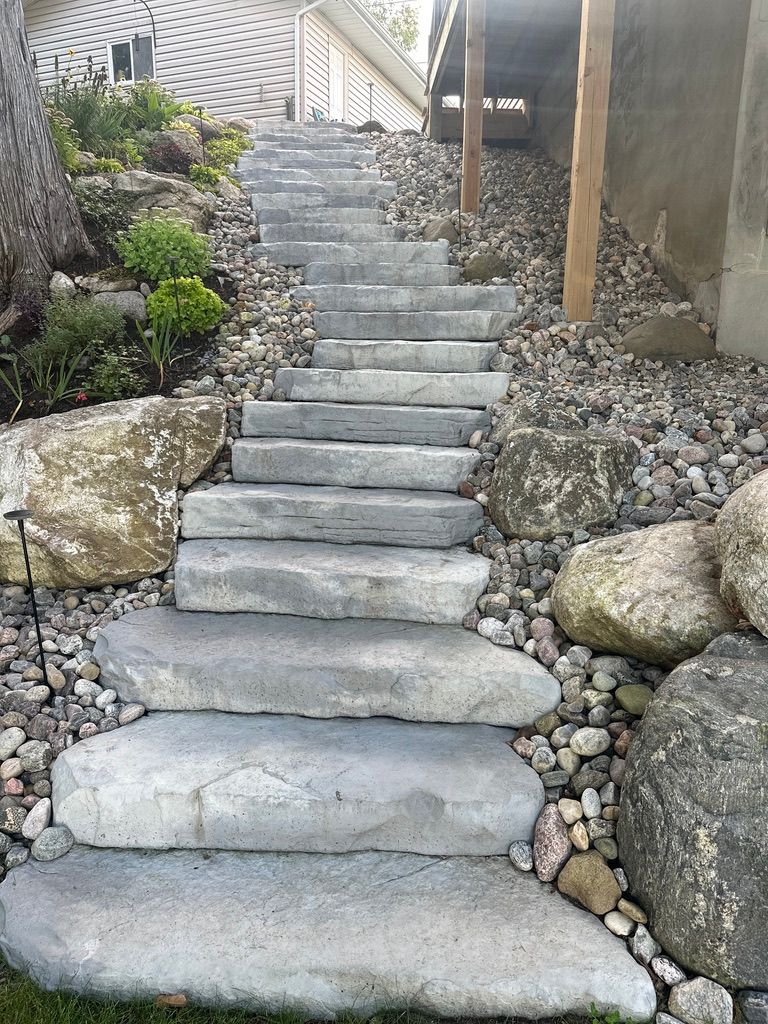
Steps between levels
Stone steps set into the wall make it easy to move between terraces.
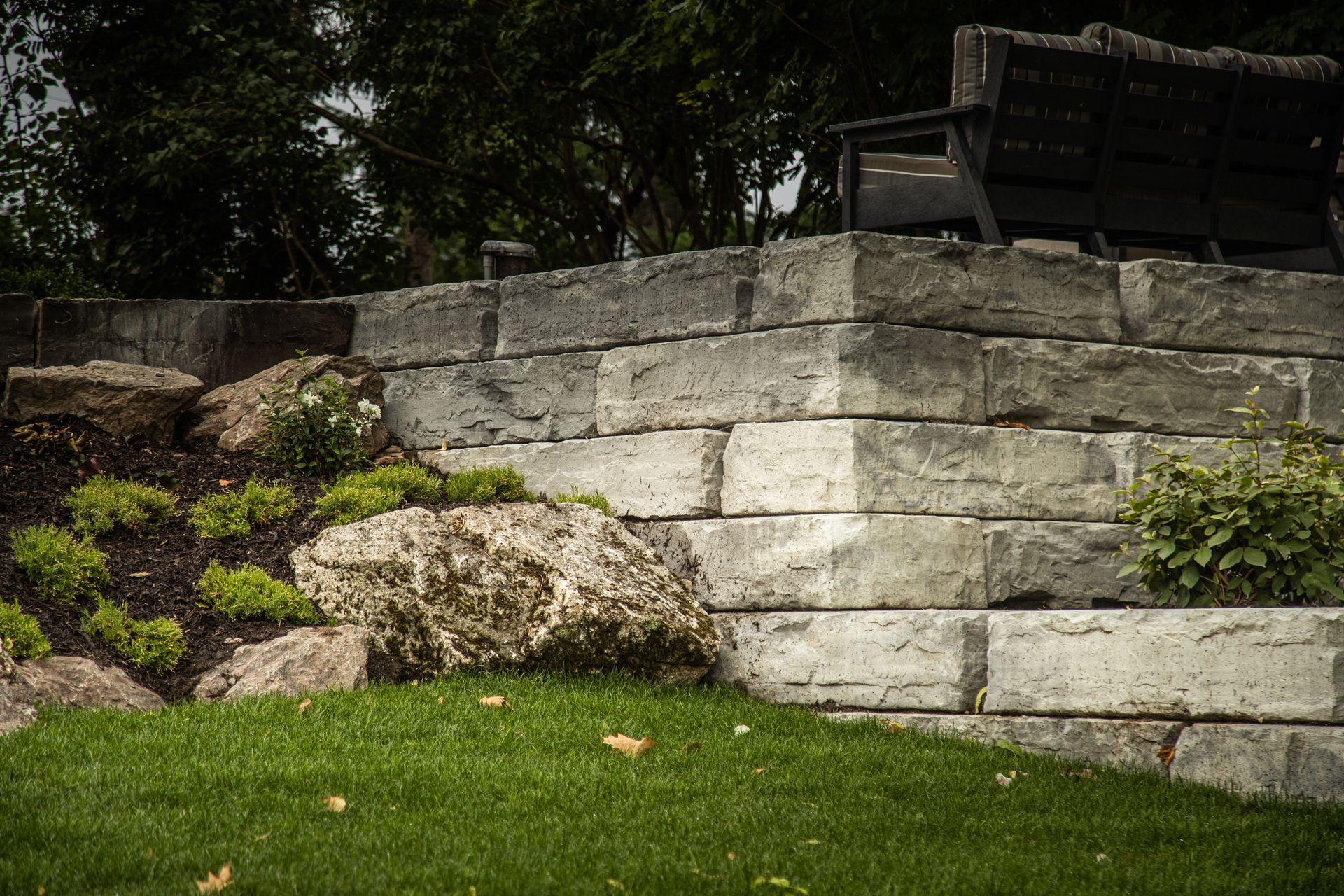
Built to Last
Water Is the Real Problem, So We Plan for It
A wall rarely fails because the block was weak. It fails because water gets trapped in the soil behind it, freezes and pushes. Each winter that pressure adds up until the wall leans, bulges or cracks.
So the work that matters most happens behind and below the wall:
- A compacted base sized to the wall's height
- Clear drainage stone behind the wall
- A perforated pipe that carries water away
- Backfill compacted in lifts as the wall rises
- Reinforcement grid on taller walls
Options
Block, Stone and Everything in Between
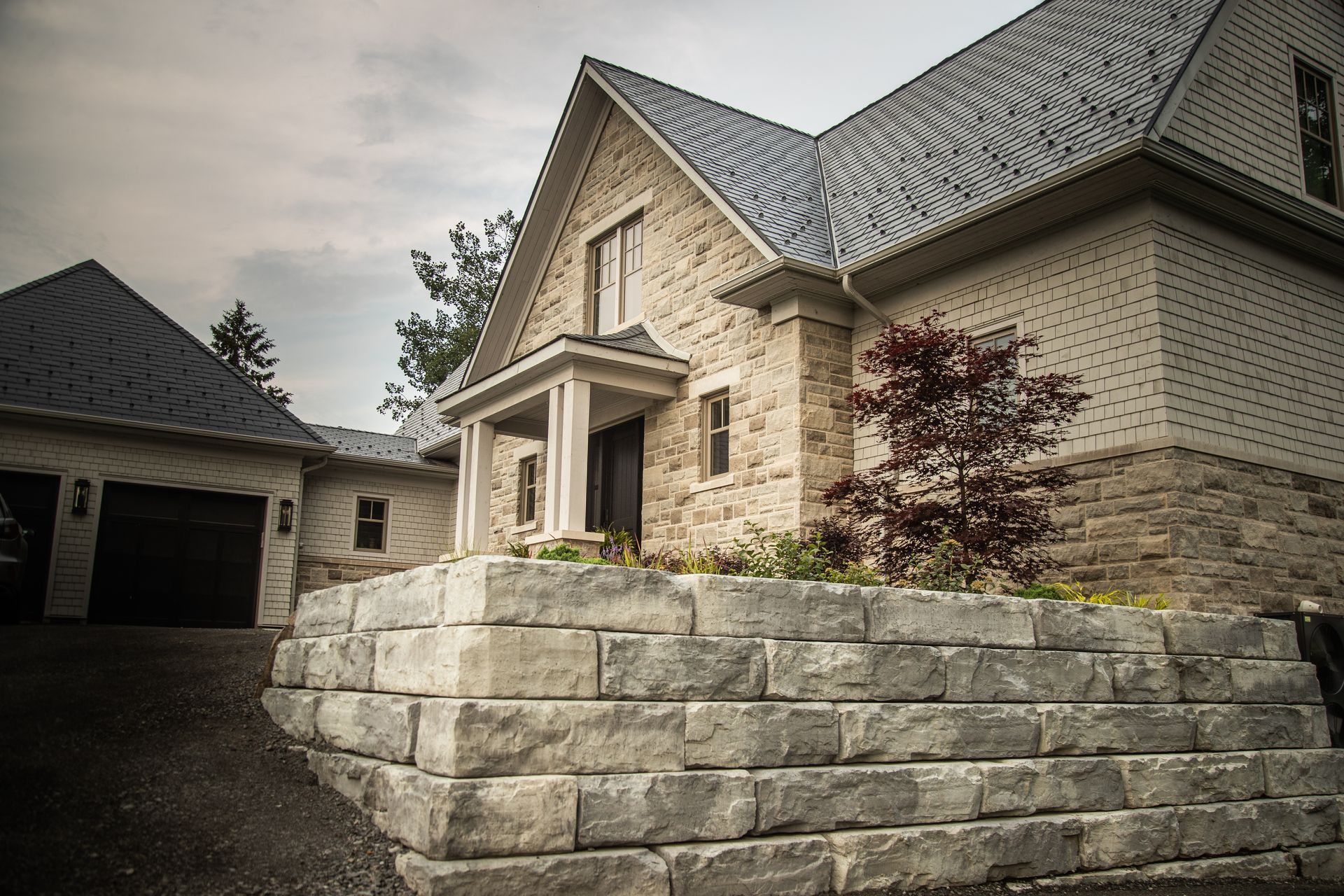
Segmental concrete block
Strong, consistent and available in many colours and textures. A great fit for most residential walls and terraces.
Natural stone
A softer, more organic look that suits gardens, cottages and older homes.
Caps and finishing
Caps, step units and lighting turn a functional wall into a finished feature.
Not sure which?
Read our guide to bricks vs. blocks for retaining walls.
Kind Words
“After much exterior work on my home, our yard and associated retaining wall and gardens were in desperate need of some expert care. Mark and his crew did a great job grading our yard, repairing retaining walls, laying new sod and crafting new borders for our gardens. Mark is a pleasure to deal with: responsive, creative, and easy to have on site.”Nancy Quinn
Know Before You Build
Permits and Wall Height
In Ontario, a retaining wall more than 1 metre in exposed height next to public property, a building entrance or other areas the public can access needs a building permit and a design from an engineer. Most garden walls and terraces fall under that height. When yours doesn't, we'll tell you early and help you plan for it.
Our retaining wall permit guide covers the details.
Step by Step
How We Build a Retaining Wall
Read the slope
We look at the grade, the soil and where water runs during a storm.
Design the layout
Height, length, curves and terraces are planned to suit the yard and your plans for it.
Set the base
The trench is dug, the base is compacted and the first course is set dead level.
Build, drain and finish
Courses go up with drainage stone and pipe behind them. Caps go on and the beds are ready for planting.
Existing Walls
Leaning, Bulging or Cracked Walls
Older walls around Kingston often show their age as a lean, a bulge or a gap at the joints. Sometimes a section can be taken down and rebuilt with proper drainage. Other times the whole wall needs to come out. We'll look at the cause, not just the symptom, and give you an honest recommendation.
More on this: should you repair or replace your patio or retaining wall?
Talk to Us About Your Wall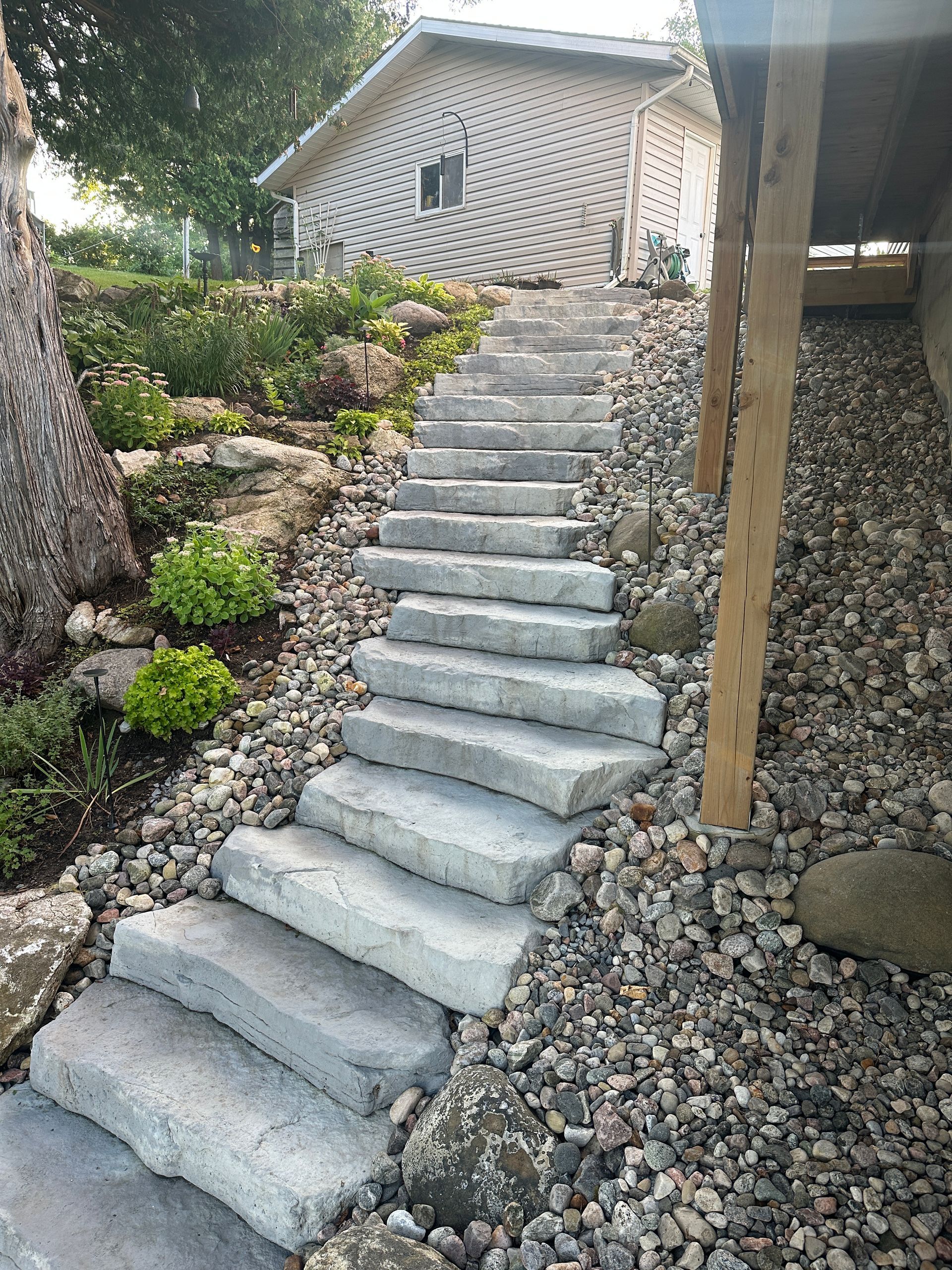
Common Questions
Retaining Wall FAQ
How tall can a retaining wall be without a permit?
Walls up to 1 metre in exposed height generally don't need a building permit. Taller walls in certain locations need a permit and an engineered design.
How long does a retaining wall last?
A properly drained wall on a good base can last for decades. Walls built without drainage are the ones we most often rebuild.
Can you fix a wall that's leaning?
Often, yes. We take down the failing section, correct the base and drainage, then rebuild it. If the problem runs the full length, replacing the wall is usually better value.
Why does a wall need stone behind it?
Clear stone lets water drain down to the pipe instead of soaking the soil. Wet soil is heavy, and frozen wet soil pushes even harder.
Can you build in a backyard with tight access?
Usually. We plan equipment and deliveries around the space we have, and smaller machines fit through most gates.
Do walls have to be built in summer?
No. We build from spring until the ground freezes, and fall is often a great time to start.
Keep Reading
More on Retaining Walls
Ready to Make That Slope Useful?
Send us a few photos and a description of your yard, and we'll arrange a visit to look at the grade and talk through options.
Get a Quote