Choosing Hardscape Materials for Lasting Outdoor Spaces
Hardscape materials influence far more than appearance. They affect how water moves through a property, how surfaces respond to freeze–thaw cycles, and how well patios, walkways, and retaining structures perform over time. Selecting materials based on function, site conditions, and construction requirements helps ensure outdoor spaces remain stable and usable year after year.
Start With Function and Site Conditions
Material selection should begin with how the space will be used and the conditions it will be built on. Walkways require stable, slip-resistant surfaces with consistent elevation. Patios benefit from materials that resist shifting and remain comfortable underfoot. Areas exposed to heavier loads require deeper base systems and materials designed to support that weight.
Base depth, soil type, and drainage patterns all influence long-term performance.
Choosing Hardscape Materials
Concrete Pavers
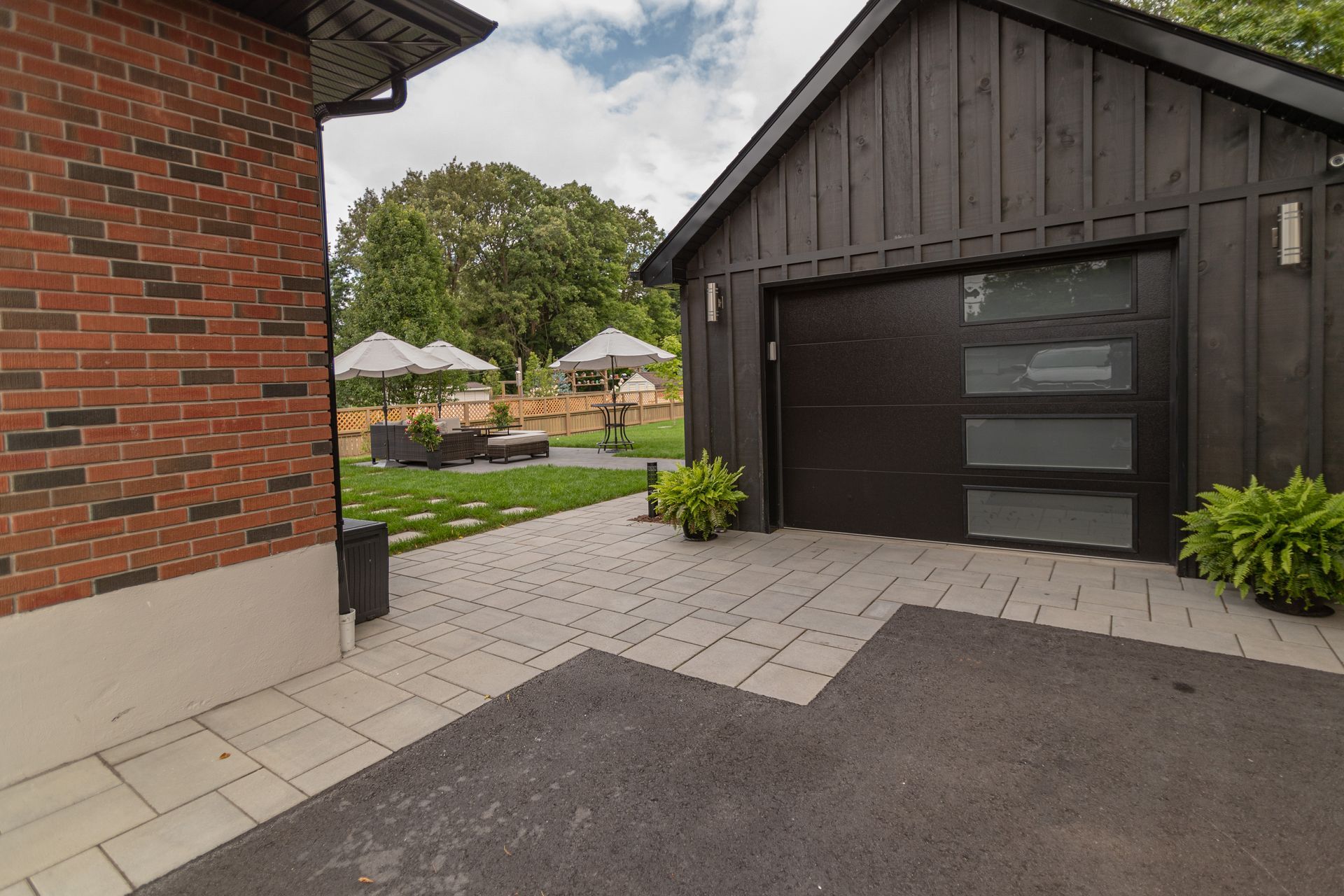
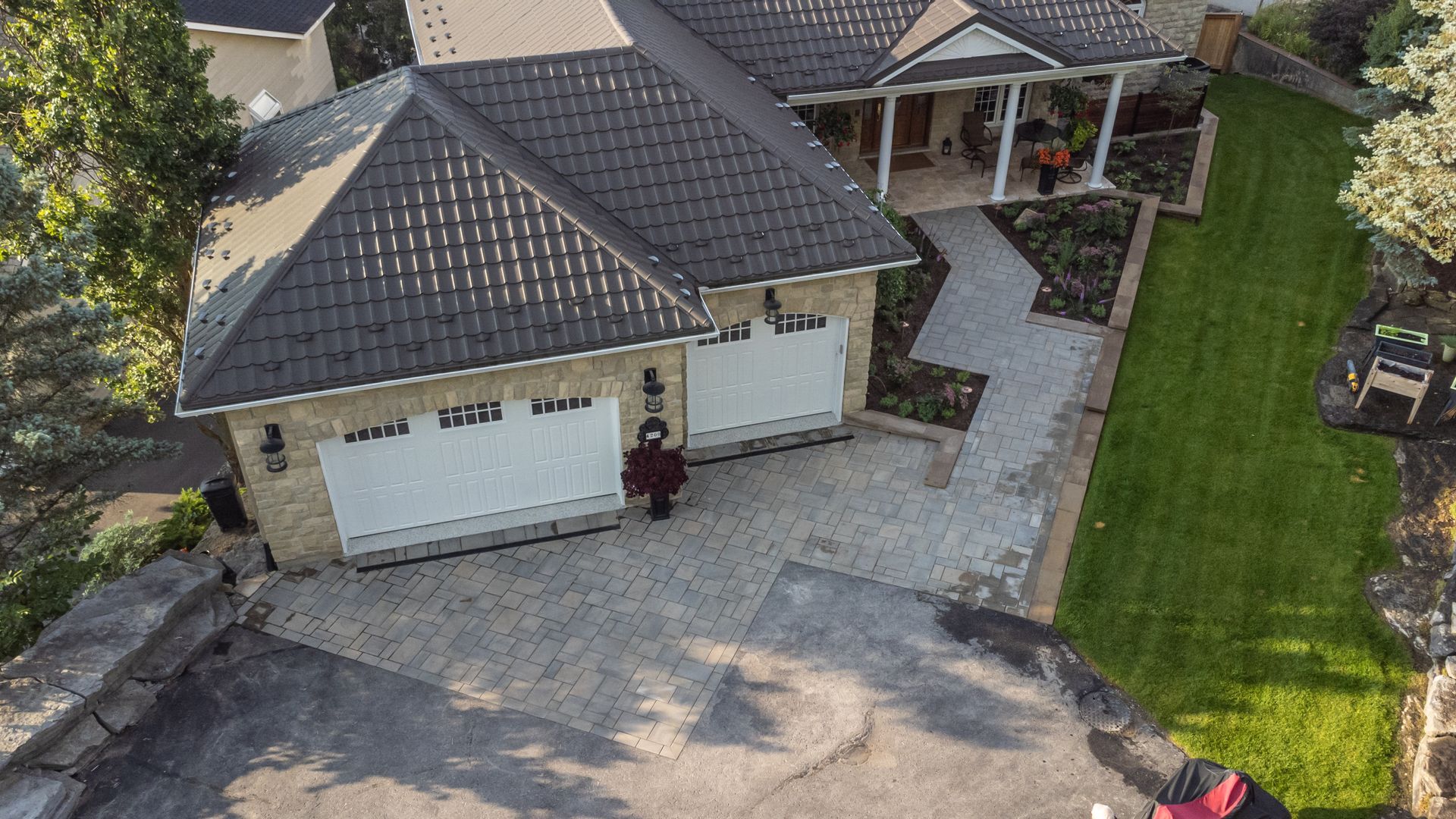
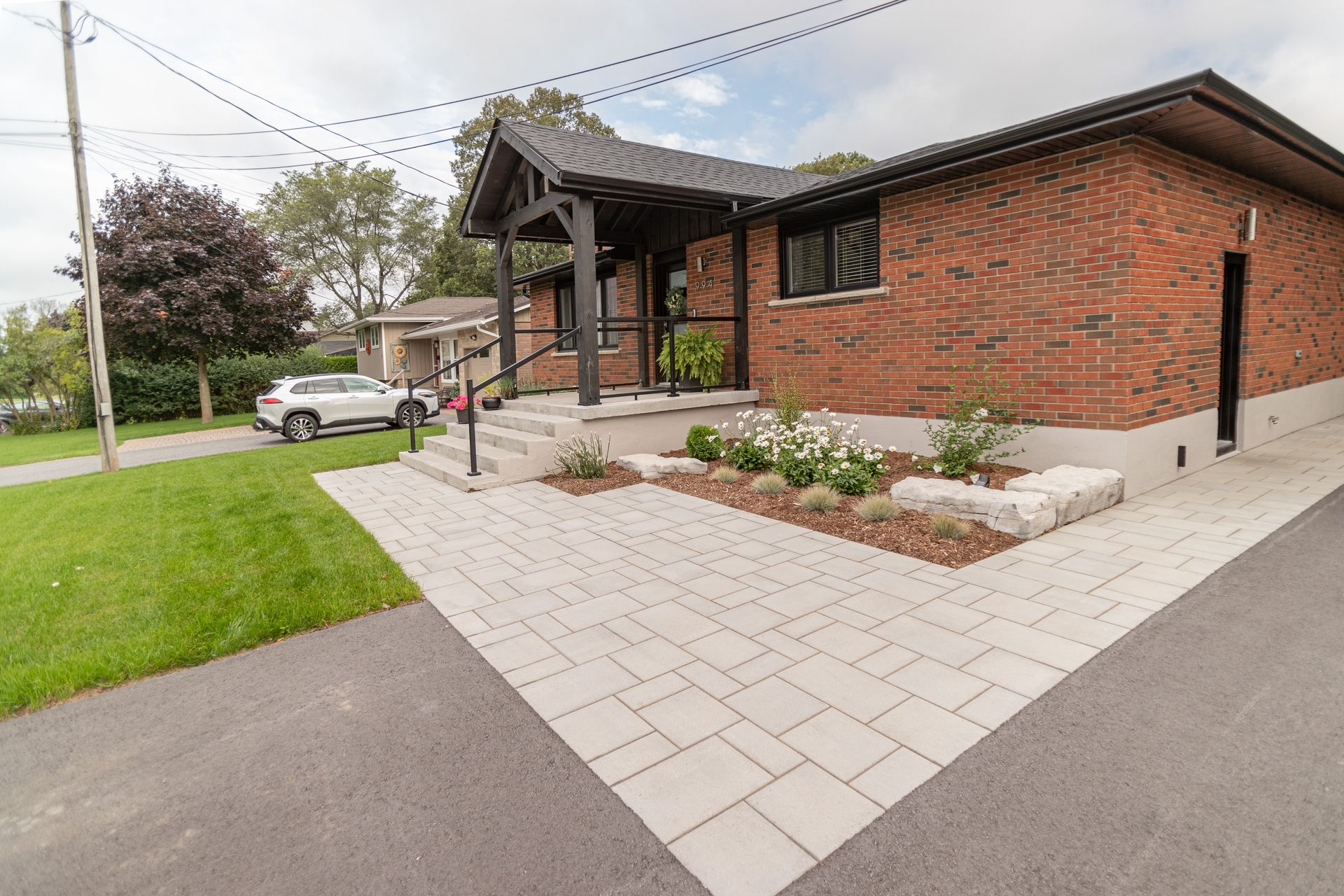
Concrete pavers are widely used for patios and walkways because of their uniform sizing, design flexibility, and long-term performance. Individual units can be replaced without disturbing surrounding areas, which helps manage maintenance over time.
Performance depends heavily on proper base construction and drainage planning. Water trapped beneath hardscapes can work through moisture cycles and cause movement over time, which is why surface slope and material selection must be designed with drainage in mind.
Natural Stone
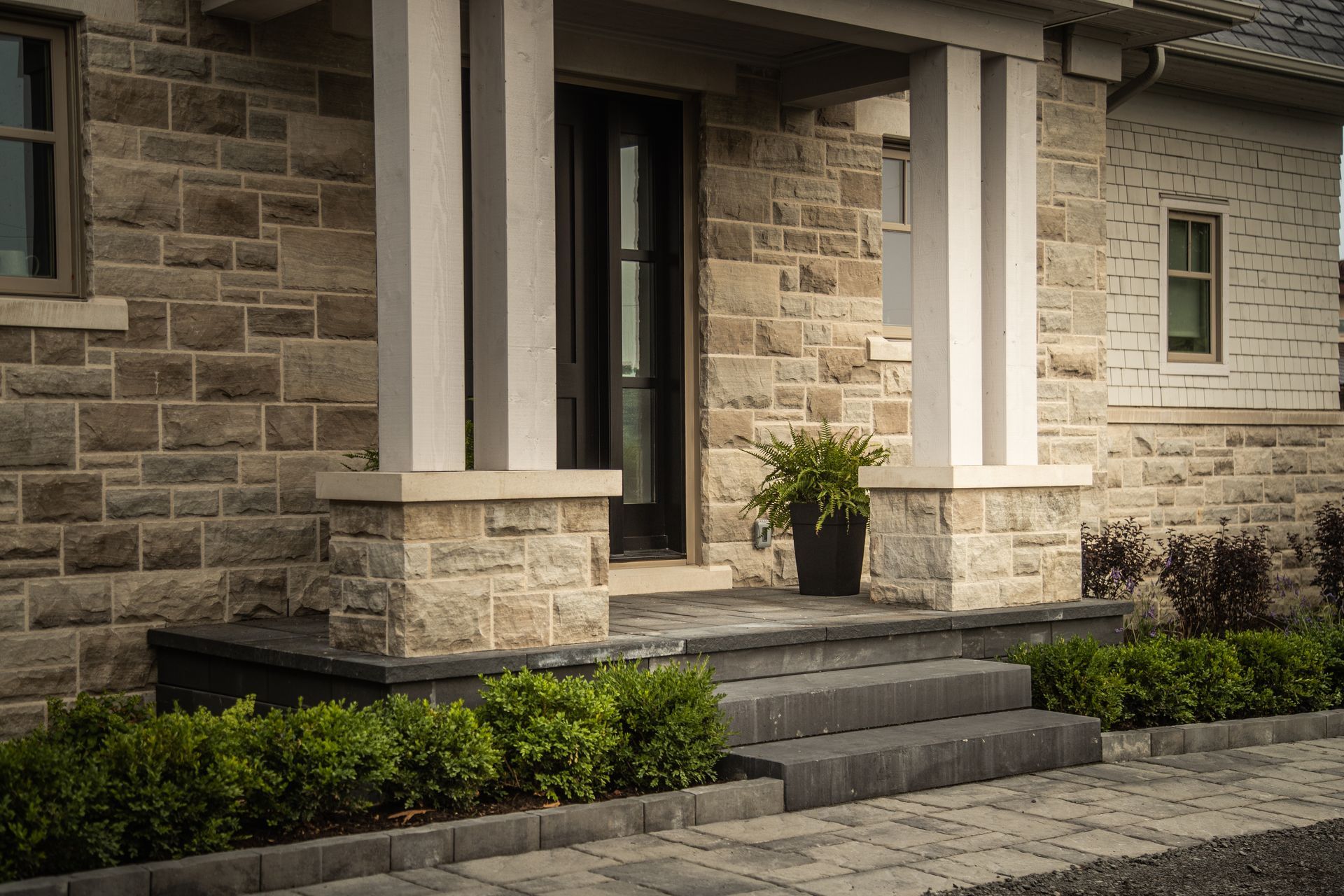
Natural stone provides a distinctive appearance and performs well when matched to specific applications. Thickness, surface texture, and bedding method all influence durability and how water moves across and beneath the stone.
In regions prone to frost and variable soil moisture, understanding how soil moisture and freeze-thaw dynamics interact with paving materials is important for long-term stability.
Large Slabs
Large slabs create a clean, modern look with fewer joints. They can be ideal for larger patio areas where a smooth, open feel is the goal. Because slabs are heavier and cover more area per piece, base prep and handling must be planned carefully.
Armour Stone and Wall Stone
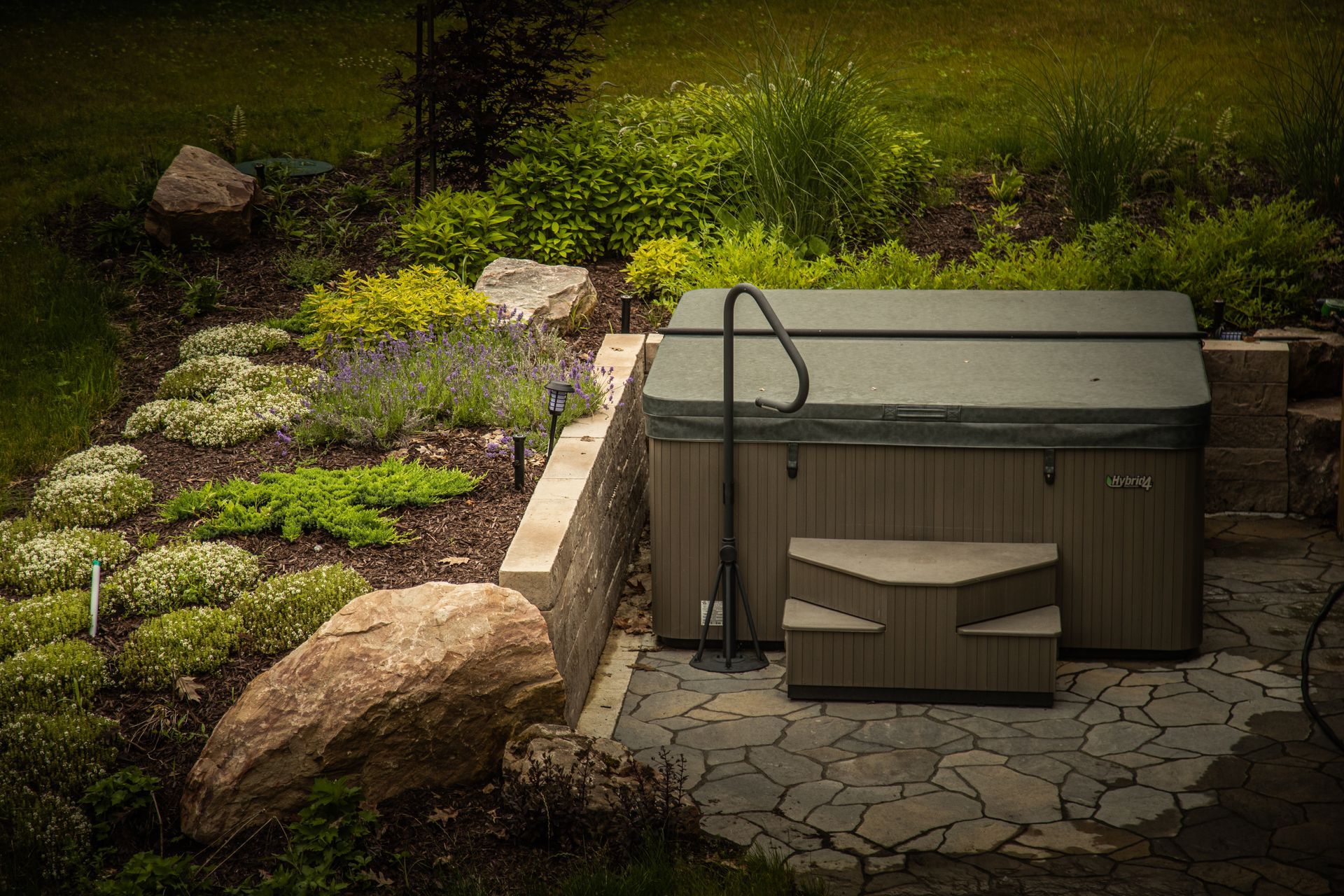
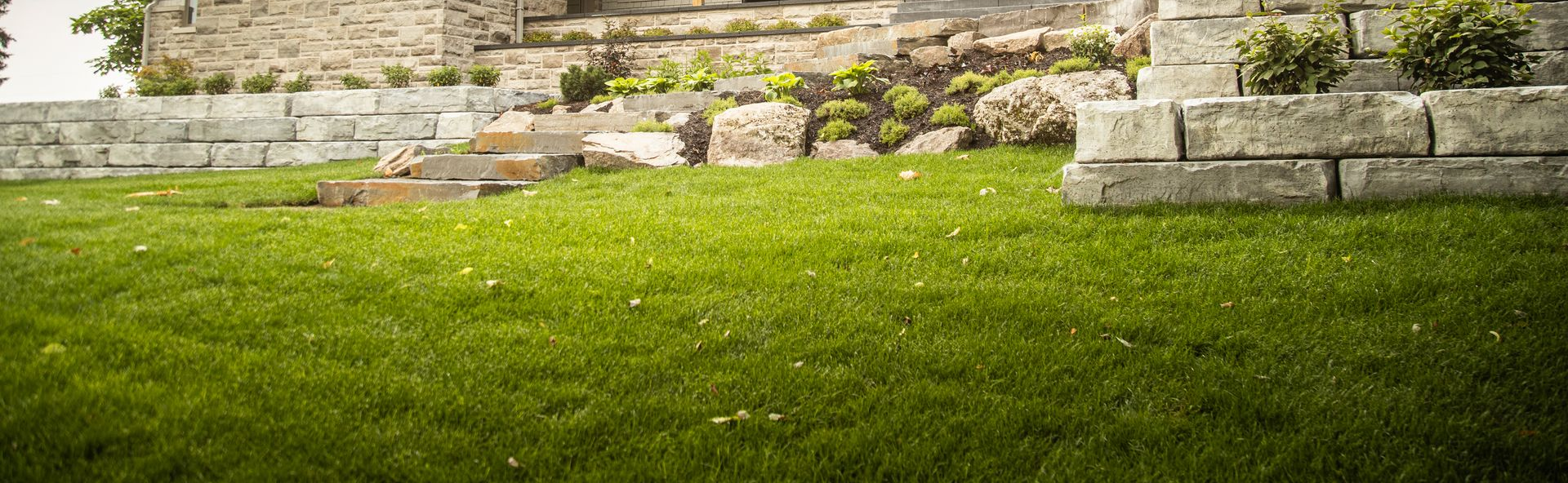
Armour stone and wall stone are used to manage elevation changes and provide structural support within a landscape. These materials depend on solid base preparation and effective drainage behind the stone structure to remain stable.
Poor drainage can create soil moisture issues that undermine stability over time, especially where water accumulates around retained soils. Ensuring surface water moves away from retaining structures protects both soil and stone integrity.
How Material Choice Affects Drainage and Longevity
Hardscape materials influence water movement both across the surface and into the base below. Surface texture and joint spacing affect how quickly moisture drains away, while the underlying base must be constructed to allow water to exit the system rather than collect beneath hardscapes.
Materials that facilitate moisture moving down and away from the surface can reduce stress from freeze-thaw cycles and minimize movement over time.
Matching Materials to Use and Traffic
Hardscape materials should be chosen based on how the space will be used and the expected load. Areas with frequent foot traffic benefit from surfaces that resist movement and edge breakdown. Gathering spaces require stable materials that remain level through seasonal moisture changes.
Heavier-use zones, such as driveways or vehicle access areas, rely on materials and base designs that prevent shifting under load. Proper design and construction sequencing support performance even under heavy use.
Design Consistency Across the Landscape
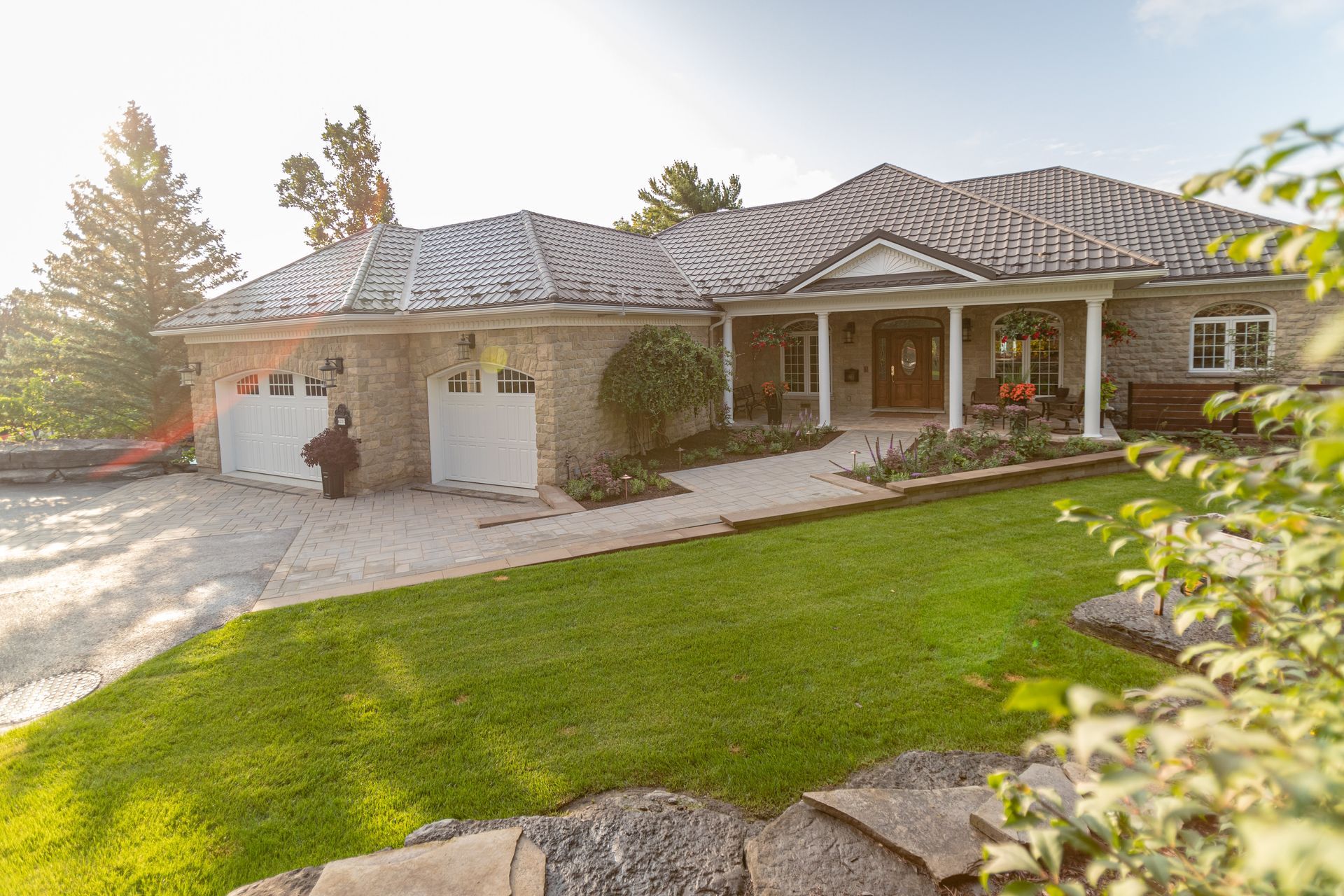
Using complementary materials across patios, steps, walkways, and walls creates visual cohesion and a unified feel across outdoor spaces. Repeating tones, textures, and finishes allows different zones to feel intentional and connected.
Consistency also supports smoother transitions between areas, especially where grade changes occur and careful integration is needed.
Choosing Materials With Long-Term Performance in Mind
Hardscape materials should be selected with climate, soil conditions, drainage patterns, and installation depth in mind. Seasonal changes, moisture movement, and freeze-thaw cycles influence how materials behave over time.
Materials installed with proper preparation and drainage planning are more likely to remain stable and functional across years of weather variation.