The Real Reason Some New Landscapes Don’t Age Well
A new landscape can look beautiful the week it is finished. The stone is clean, the mulch is fresh, the plants are upright, and the edges are sharp. Everything feels complete.
Then a few seasons pass.
The patio starts to settle in one corner. The garden beds look crowded in some areas and bare in others. Water collects where it never used to. The walkway shifts slightly. Plants that looked healthy at installation begin to struggle. The whole space still looks nice, but it no longer feels as polished or as practical as it did at the start.
When a landscape ages poorly, the problem is rarely one single choice. It is usually the result of decisions that looked fine at installation but did not account for water, soil, plant growth, maintenance, and how the space would actually be used over time.
A Good First Impression Is Not the Same as Long Term Performance
A landscape can be designed to photograph well without being designed to perform well. Fresh sod, new stone, young plants, and clean mulch can hide weak planning decisions for a while.
The real test comes later. A strong landscape should still make sense after heavy rain, freeze thaw cycles, plant growth, foot traffic, shade changes, and regular maintenance.
Some landscapes struggle because too much attention is placed on the finished look, while the less visible parts are treated as secondary. Base preparation, grading, drainage, soil quality, plant spacing, and transitions between materials may not be exciting, but they are often what determine how well the space holds up.
Professional
landscape design services help connect the visible and hidden parts of a project so the result is not only attractive on day one, but practical for years.
The Groundwork Sets the Lifespan
A patio, walkway, retaining wall, or garden bed is only as reliable as the preparation underneath it. If the base is rushed, the soil is unstable, or the grade is not properly considered, the surface may begin to move before the materials have reached the end of their natural lifespan.
This is why some new spaces seem to age quickly. The stone itself may not be the issue. The plants may not be the issue. The problem may be below the surface.
Poor groundwork can lead to:
- Pavers settling unevenly
- Edges spreading or losing shape
- Water pooling around hardscape features
- Garden beds washing out
- Lawns developing low spots
- Retaining walls taking on extra pressure
- Steps or pathways becoming uneven
The finished landscape may look complete, but if the structure below it is not built for the site conditions, movement is more likely.
Water Decides How a Landscape Ages
Water is one of the biggest reasons landscapes either age well or deteriorate early. When rainwater has a clear, controlled path, outdoor features are more likely to stay stable. When water collects, spreads, or moves through the wrong areas, it can slowly weaken the landscape.
The City of Calgary describes Low Impact Development as an approach that works with nature to manage stormwater runoff where it falls, using functional drainage and landscape features to support better water movement.
On residential properties, that same idea matters at a practical level. Patios need proper slope. Garden beds need soil that can support plant health without holding too much water. Downspouts need to discharge in sensible locations. Hard surfaces need to be planned so they do not push water toward the wrong area.
A landscape that ignores water may look finished, but it can quickly develop symptoms after a few storms:
- Soil erosion along beds or slopes
- Mulch washing onto lawns or hardscapes
- Low areas that stay wet
- Plants struggling in saturated soil
- Frost movement in hardscape areas
- Water sitting near foundations or steps
Effective
drainage and grading should be planned before the visible work is completed, not added only after a problem appears.
Plants Need Room to Become the Landscape
A common reason new landscapes age poorly is that plants are chosen and placed for immediate fullness instead of mature growth. On installation day, a full garden bed can look impressive. A few seasons later, it may become crowded, uneven, or difficult to maintain.
Plants need enough space to grow into their natural shape. Shrubs planted too close together may compete for light and air circulation. Perennials may spread beyond the intended edge. Trees planted too close to structures, walkways, or utilities can create future issues. Beds that were meant to look lush can become overgrown if mature size is ignored.
Tree Canada explains that trees provide benefits such as food, shade, air quality improvement, and environmental value. Understanding the benefits of trees helps homeowners see trees as long term landscape investments, not just decorative additions.
Proper planting design considers how the space will look now, next year, and several years ahead. That means choosing the right plant for the right location, spacing properly, and building in room for the landscape to mature.
Materials Need to Match the Property
Not every material suits every yard. Some materials work well in dry, flat, open spaces but struggle in shaded, wet, sloped, or high traffic areas. Others may look beautiful but require more upkeep than the homeowner expected.
A landscape can age poorly when materials are chosen for appearance alone. A walkway surface may become slippery in shade. A patio material may show movement if the base and drainage are not suited to the site. A decorative border may not hold up against winter conditions, snow clearing, or heavy use.
The City of Vancouver’s water wise landscape guidance reinforces the importance of planning landscapes around site conditions, water use, soil, planting choices, and long term maintenance.
For homeowners, the lesson is simple: material selection should be based on both style and performance. The right material should suit the property, the expected use, the maintenance level, and the surrounding landscape.
Transitions Are Where Weakness Often Shows
Some of the first areas to age poorly are the transition points. These are the places where one part of the landscape meets another.
Examples include:
- A patio meeting a lawn
- A walkway meeting a driveway
- A garden bed meeting turf
- Steps meeting a slope
- A retaining wall meeting planting
- Mulch meeting stone
- A hardscape edge meeting soft soil
When transitions are not planned carefully, they can become messy, unstable, or difficult to maintain. Edges spread. Mulch spills out. Grass creeps into beds. Soil washes over stone. Pavers shift along the perimeter.
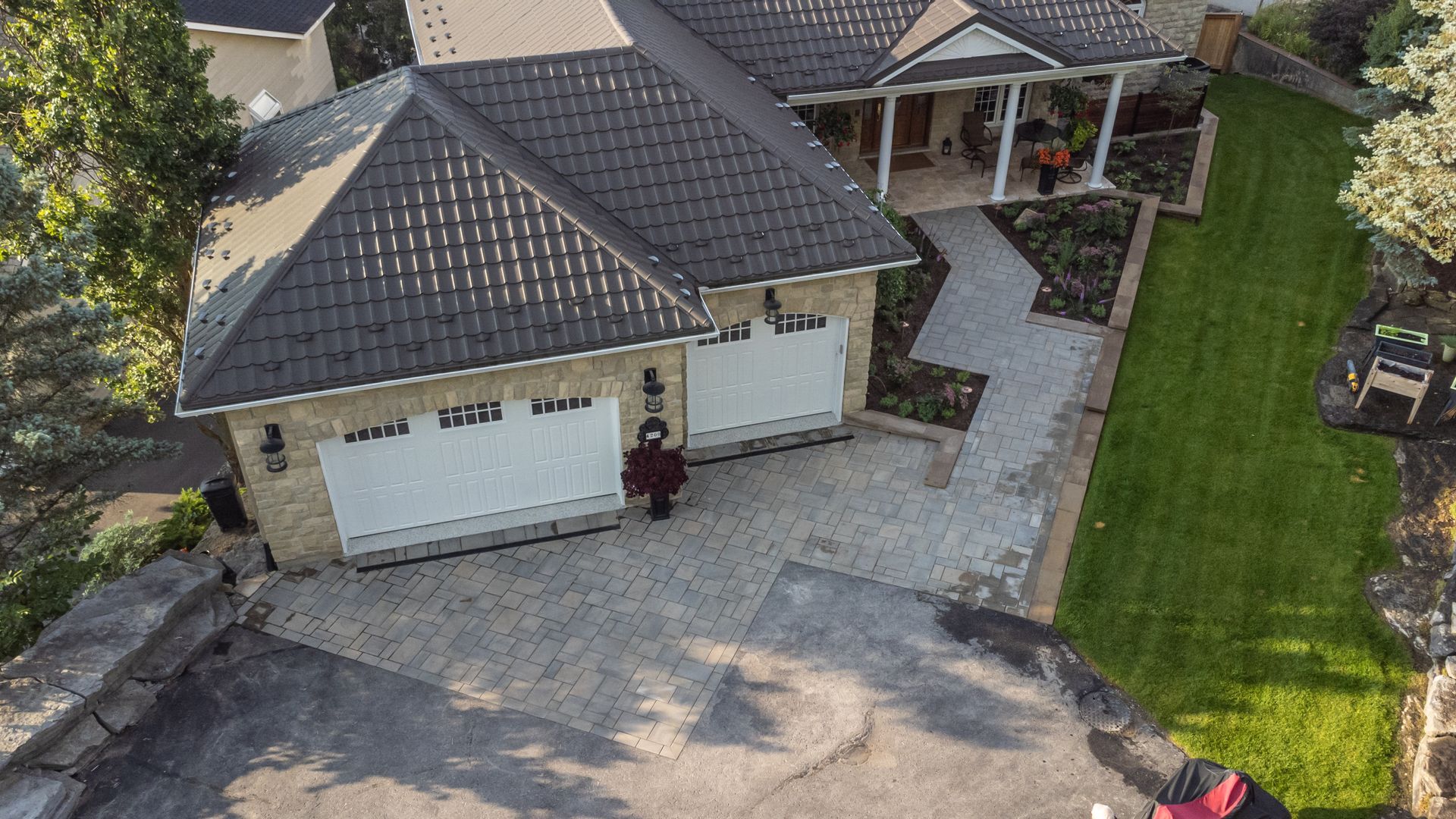
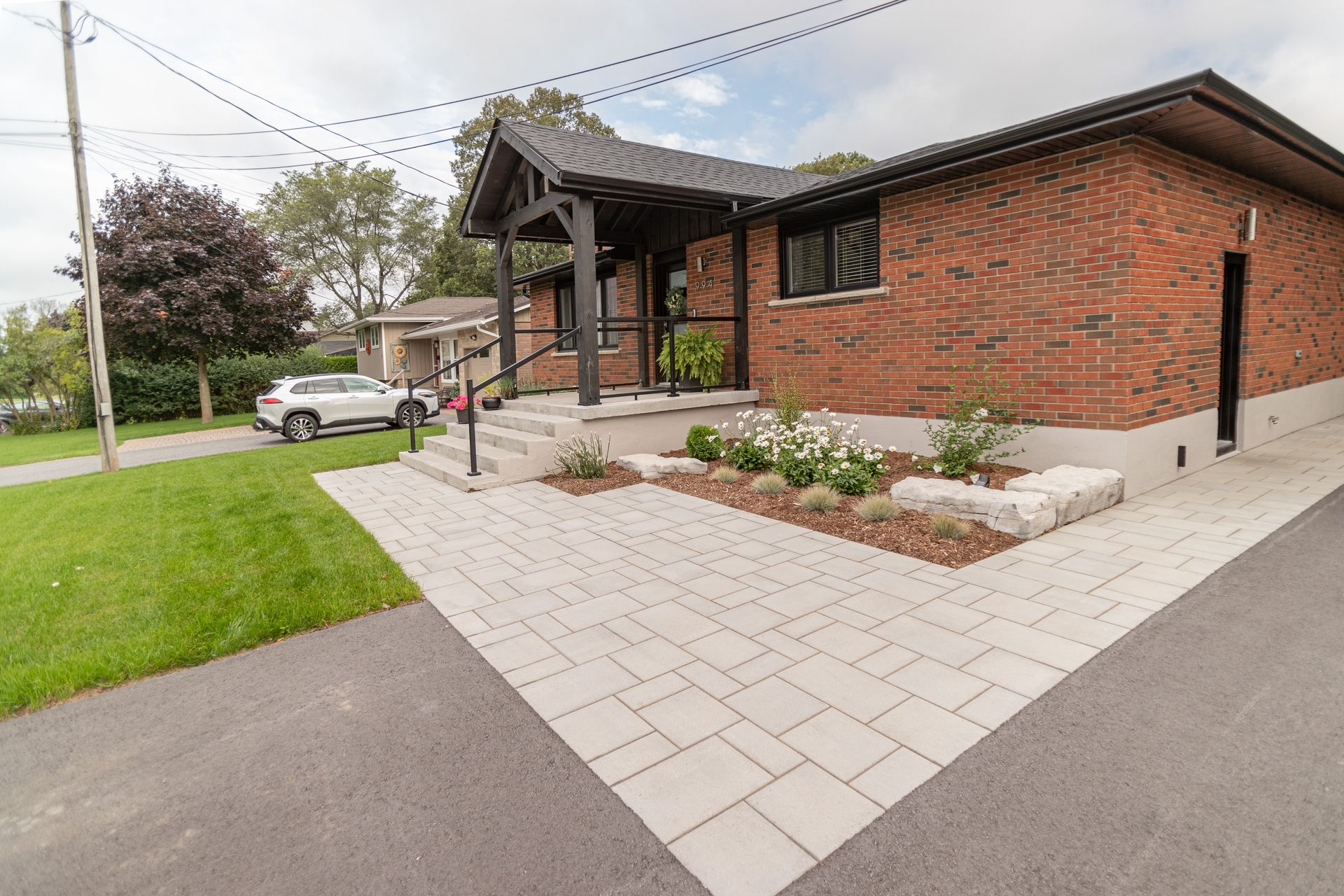
Strong hardscaping does more than create patios, walkways, and walls. It also supports clean transitions, stable edges, and functional connections between outdoor areas.
These details may seem small during the planning stage, but they often decide how polished the landscape feels years later.
Maintenance Should Be Part of the Original Plan
Every landscape needs care, but some spaces are much easier to maintain because maintenance was considered from the start.
A design that ignores maintenance can become frustrating quickly. Narrow lawn strips may be hard to mow. Overly detailed bed shapes may take constant edging. Dense planting may require frequent pruning. Materials may stain, shift, or collect debris faster than expected.
A better plan considers:
- How often beds will need weeding
- How plants will be pruned as they mature
- How leaves, snow, and debris will move through the space
- How easy it is to mow or trim edges
- How irrigation or watering will be managed
- How outdoor furniture, tools, and equipment will move through the area
A landscape does not have to be maintenance free to age well. It needs to be maintainable for the homeowner’s lifestyle.
The Best Landscapes Are Built for Change
Outdoor spaces are never frozen in time. Soil settles. Plants grow. Shade patterns shift. Weather changes. Families use spaces differently as life changes.
The landscapes that age best are not the ones that stay exactly the same. They are the ones designed with enough structure and flexibility to handle change.
That means planning for drainage, access, mature plant size, durable materials, practical maintenance, and future use. It also means understanding that the most important parts of a landscape are not always the most visible.
A new landscape should look good when it is finished, but it should also have the right foundation to keep working well after the first season. When the planning is thoughtful, the space can mature instead of decline.