Front Yard Landscaping That Improves Curb Appeal and Function
Front yard landscaping sets the tone for the entire property. It shapes first impressions, influences how people move through the space, and plays a practical role in drainage, safety, and long-term maintenance. A well-planned front yard balances visual appeal with layouts and materials that perform reliably through Ontario’s seasonal changes.
Rather than focusing on decoration alone, effective front yard design considers structure, planting strategy, and how the space connects to entrances, walkways, and the surrounding landscape.
Creating Clear Movement Through the Space
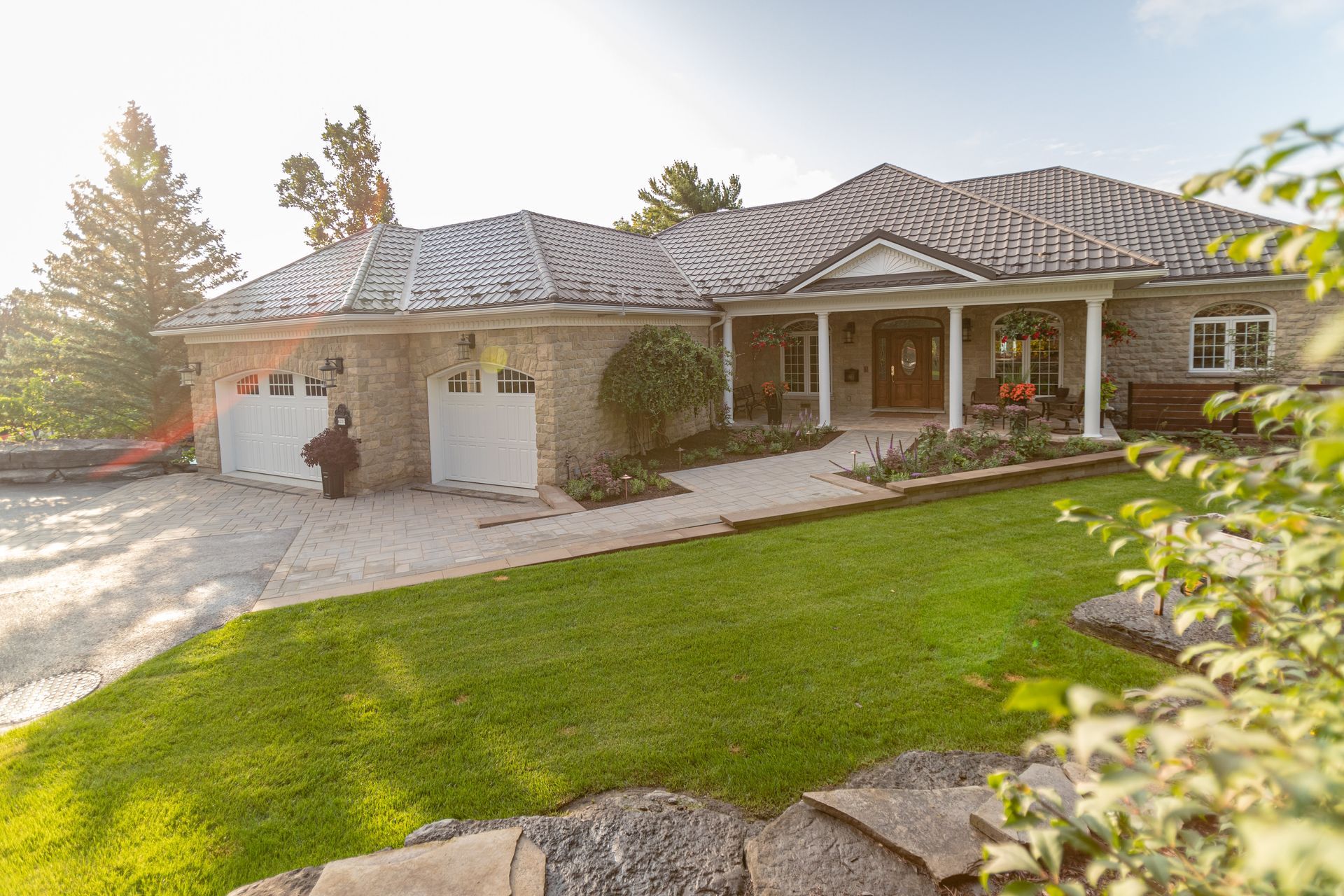
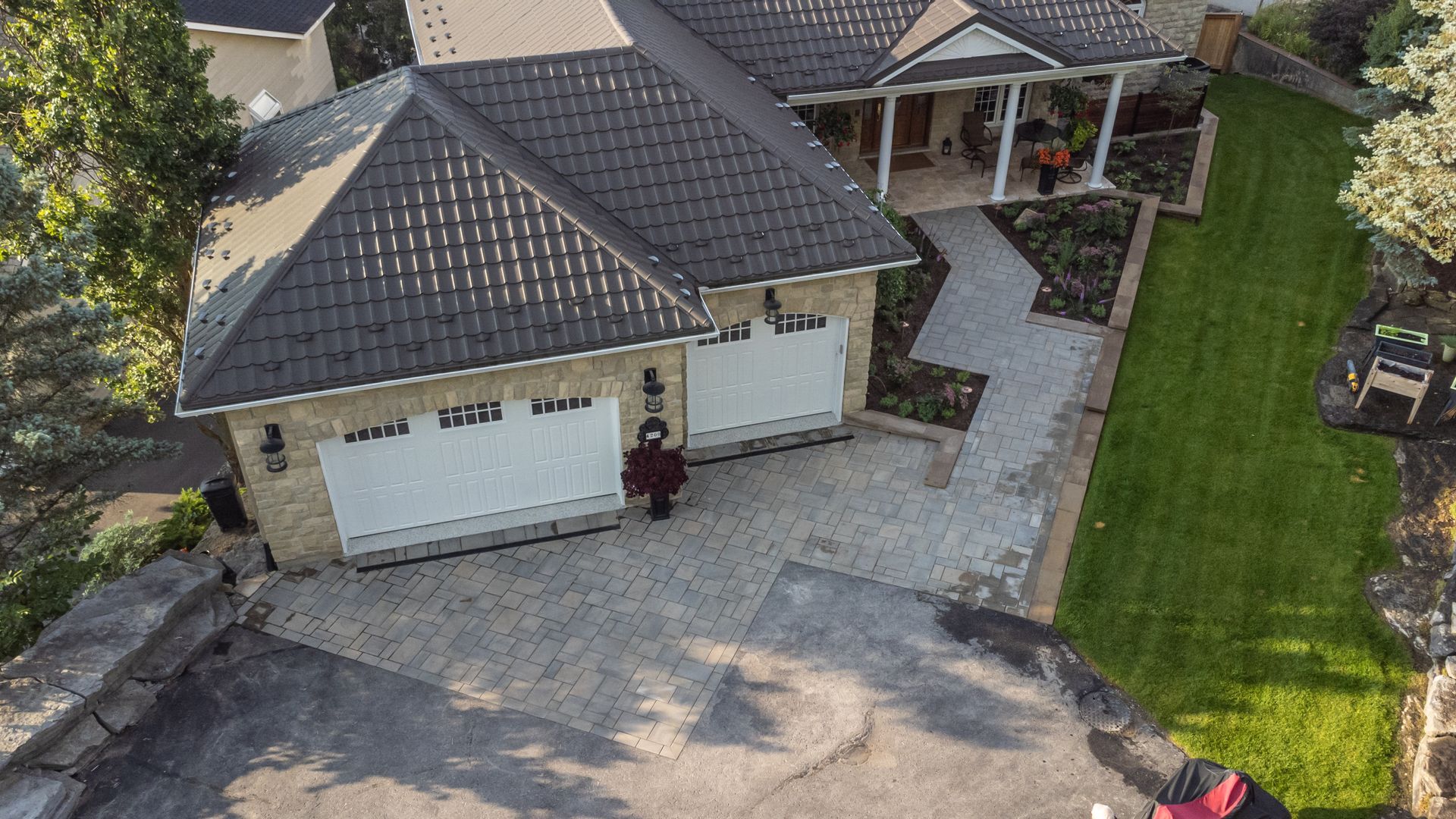
The way people approach and move through a front yard should feel natural and intentional. Front walkways and entry paths guide visitors clearly from the sidewalk or driveway to the front entrance, while planting beds and hardscape elements help define edges and discourage foot traffic from cutting across lawns or gardens.
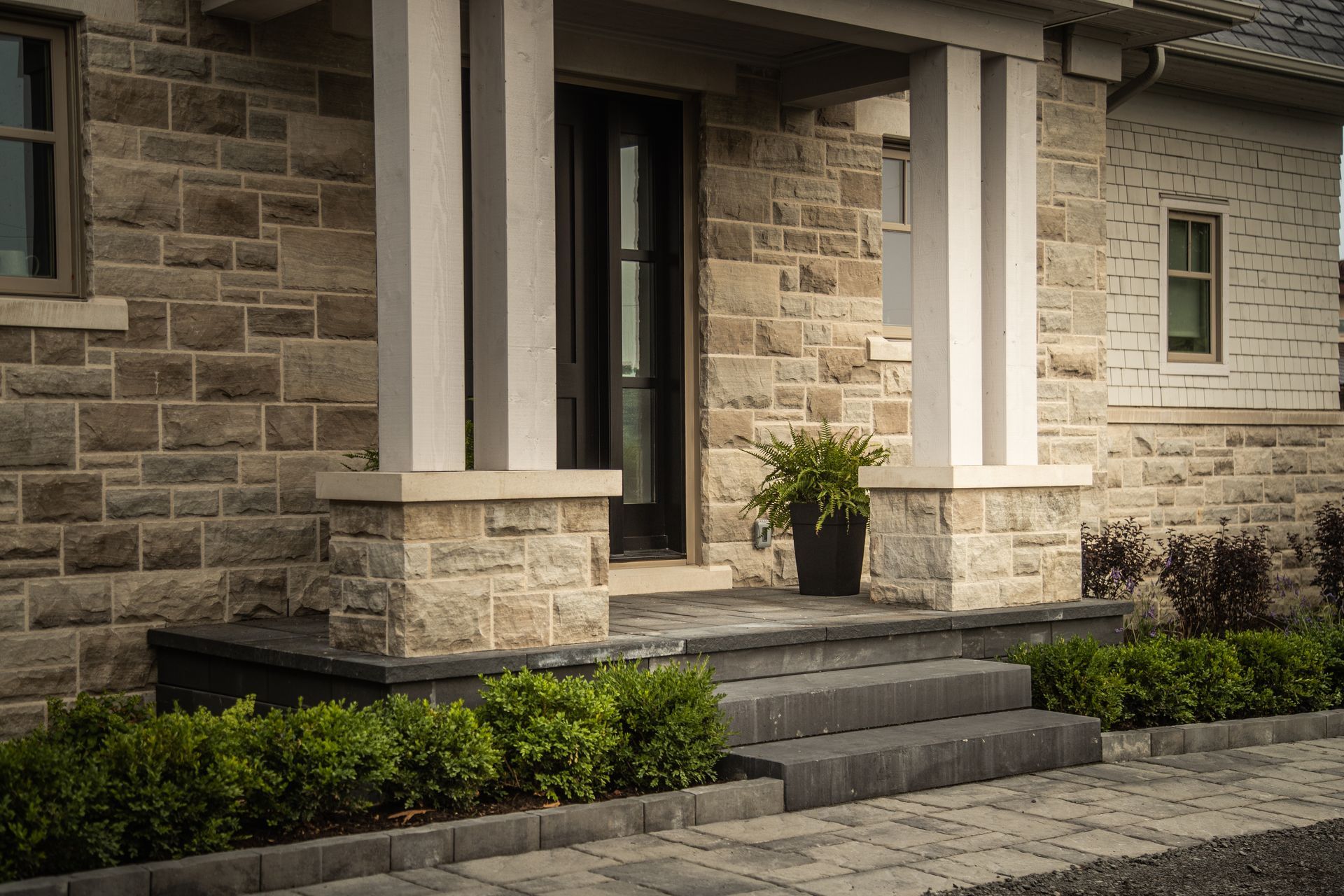
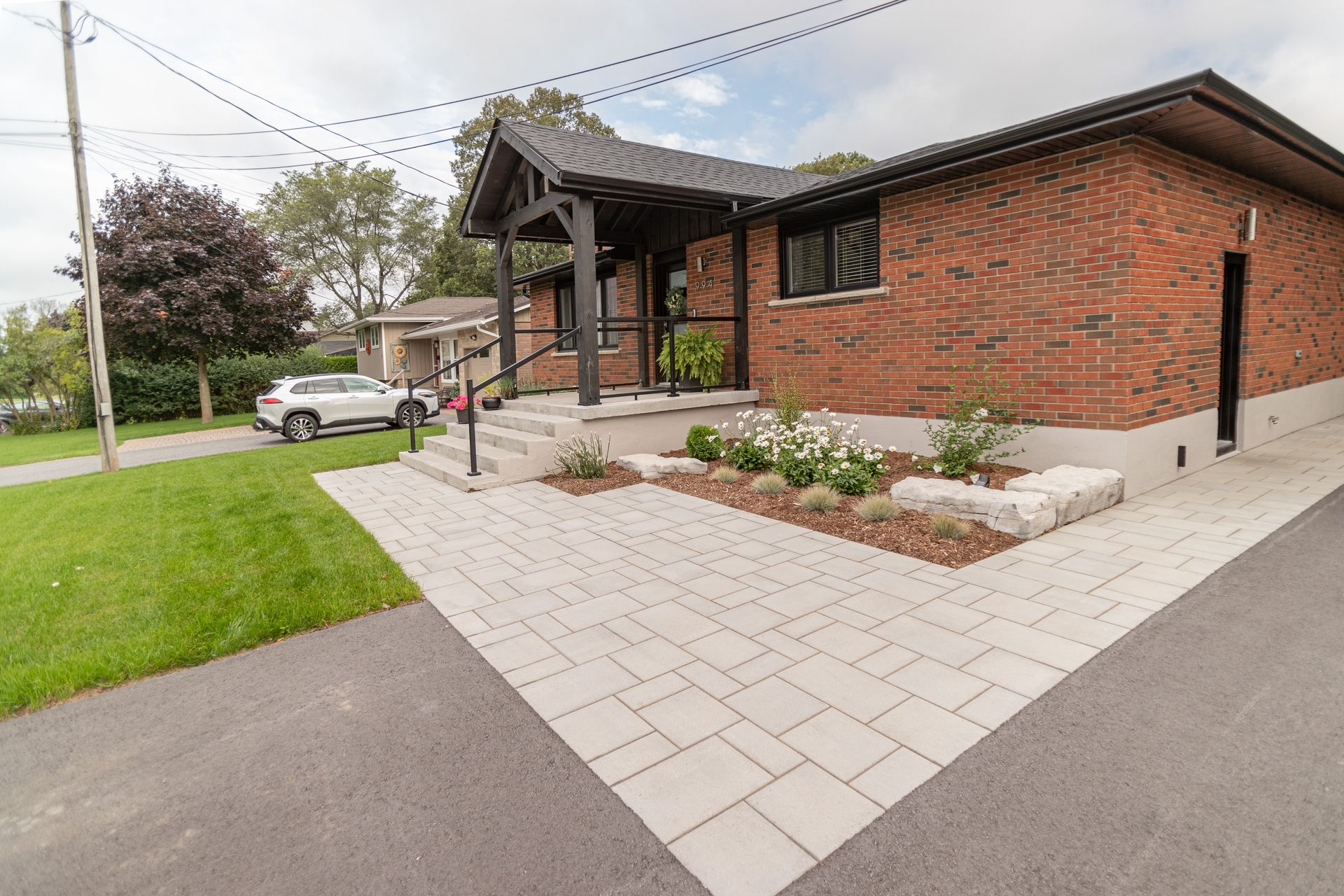
Hard surfaces near entrances and steps must remain stable and level to support safe access.Clear circulation improves both curb appeal and usability while reducing long-term wear on planted areas.
Blending Structural Elements With Planting
A strong front yard design relies on a balance between structural elements and planting. Walkways, steps, and low retaining features establish form and organization, while plant beds and edging soften edges and add seasonal interest.
Beds placed along foundations, fences, or paths help frame the home and create visual depth. Defined edging and ground cover help keep materials contained and easier to maintain. This approach supports long-term performance without making the front yard feel overly rigid or high maintenance.
Selecting Plants for Durability and Growth
Plant choice plays a major role in how a front yard performs over time. Plants suited to local climate conditions, soil composition, and sun exposure tend to require less intervention and recover more easily from seasonal stress.
Layering plants by height keeps sightlines open near walkways and entrances while adding structure farther back in the landscape.
Using Lighting to Support Safety and Visibility
Front yard lighting improves safety while enhancing the appearance of the landscape after dark. Front yard lighting for safety and visibility helps guide movement and highlights architectural or landscape features without overpowering the space. Lighting becomes especially important near grade changes and entry points.
For expert advice on enhancing your property’s first impression, check out these best practices for residential curb appeal and landscape presentation from Landscape Ontario:
Managing Drainage at the Front of the Property
Front yards often manage a significant portion of surface water flowing away from the home. Grading, surface materials, and planting placement all influence how water moves across the site.
Hardscape elements should slope gently away from foundations, while planting areas can help absorb and redirect runoff. For guidance on managing surface water around residential properties, check out this helpful resource from CMHC.
Designing for All Seasons
A front yard should perform consistently throughout the year. Materials must withstand freeze–thaw cycles, planting should maintain structure beyond peak growing months, and layouts should remain safe and accessible in varying conditions.
Designing with durability and function in mind helps ensure the front yard continues to enhance the property without requiring constant repair or adjustment.