Closing Up the Cottage: A Fall Landscape Checklist for Waterfront Properties
With Thanksgiving behind us, many families around Kingston, the Thousand Islands and Prince Edward County are making their last trips to the cottage for the year. Closing up usually means docks, water lines and furniture. The landscape deserves a few minutes of attention too.
Waterfront properties face things most yards never do: ice, waves, wind and steep access to the water. A quick walk around before you lock up can help you spot small problems while they are still small, and give you a head start on planning next year's work.
1. Walk the Shoreline
Take a slow walk along the water's edge and look for changes since spring.
- Soil washing away or banks being undercut
- Armour stone or rocks that have shifted or settled
- Bare patches where plants used to hold the soil in place
Take a few photos. Comparing them with what you see in spring makes it much easier to tell if ice or high water has moved anything over the winter.
2. Check Paths and Steps to the Water
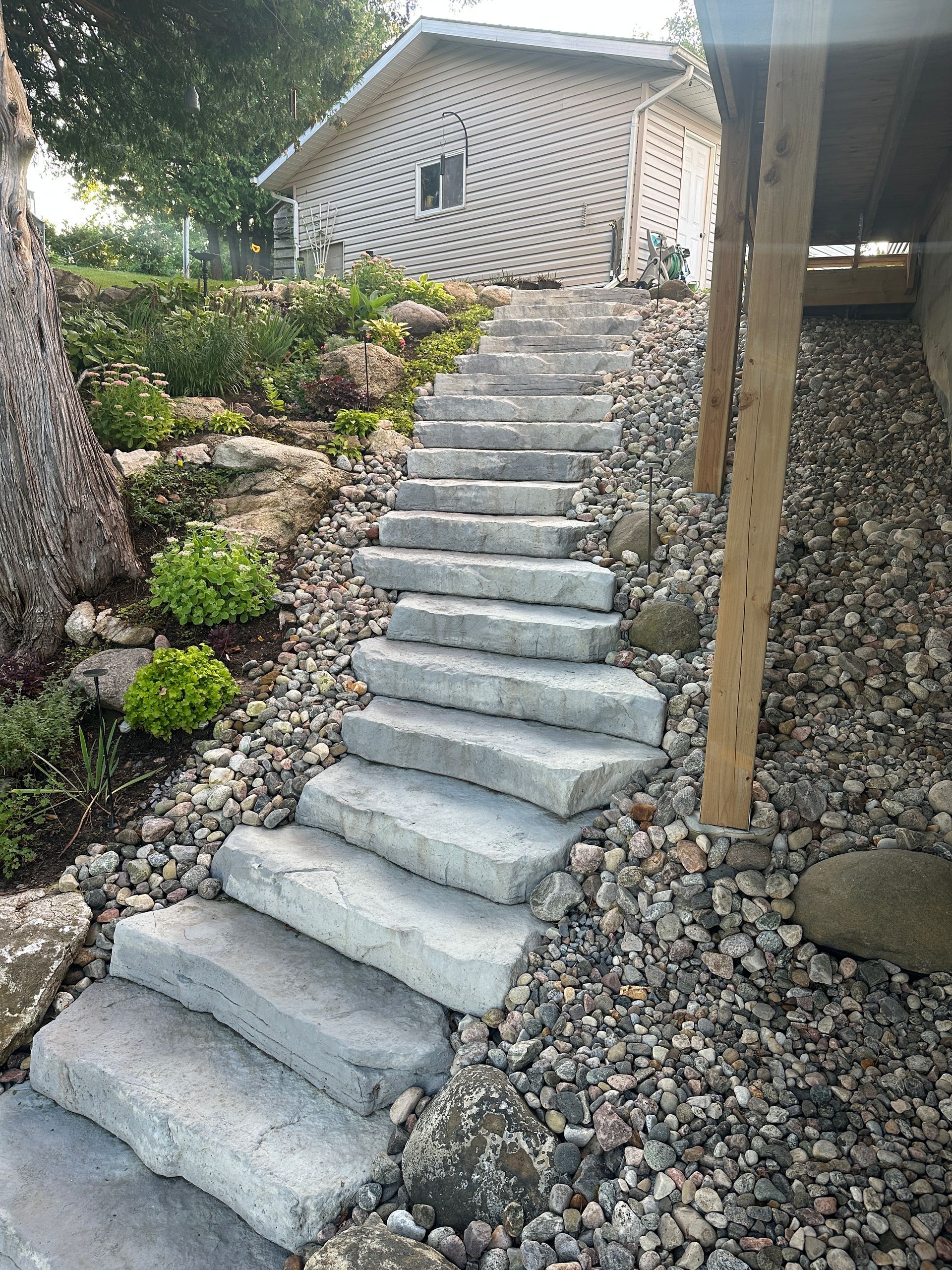
Stone steps and paths on a sloped lot take a lot of wear. Look for loose or rocking steps, stones that have heaved and spots where soil has washed out from underneath. Make a note of anything that feels unsteady so it can be repaired before the first busy weekend next summer.
3. Look at Where Water Goes
Drainage problems on a waterfront lot can lead to erosion and runoff into the lake or river.
- Point downspouts away from the cottage and away from steep slopes
- Clear leaves from swales, ditches and culverts
- Watch for small channels forming where runoff heads toward the water
If the same areas wash out every year, it is a sign the property needs a better plan for moving water. Our article on drainage and grading explains why it matters so much.
4. Prepare Plantings for Winter
- Give evergreens a deep watering before the ground freezes
- Leave natural shoreline plantings standing, since their roots help hold the bank together
- Skip fertilizer this late in the season, especially close to the water
- Protect young shrubs in exposed spots from wind and heavy snow
5. Clear and Check Hardscapes
Sweep leaves off patios and walkways before you leave. Wet leaves sitting all winter can stain stone and encourage moss. While you are there, look for low spots, loose pavers and retaining walls that lean or bulge. Our guide to preparing your landscape for an Ontario winter has more general tips.
6. Mark Edges for Winter Access
If anyone plows or checks on the property over winter, mark the edges of the driveway, paths and garden beds with stakes. It keeps plows off the lawn and away from pavers, edging and landscape lighting hidden under the snow.
7. Start Planning Spring Projects Now
Work near the water often needs approval before it can begin. Depending on where your property is, that may involve the local conservation authority, such as Cataraqui Conservation or Quinte Conservation, and sometimes other agencies. Approvals take time, so starting the conversation in fall or winter gives you the best chance of building early in the season.
Fall is also a good time to think about what would make the property easier to enjoy, such as safer steps to the dock, a level patio or low-maintenance planting that does not need weekly care.
Let's Make Next Season Easier
Mark of Excellence Landscaping works on waterfront and cottage properties across the Kingston area, from the Thousand Islands to Prince Edward County. If you noticed something on your walk-through that needs attention, or you have ideas for next summer, contact us to book a consultation. We will help you plan the work so it is ready when you are.