Retaining Walls for Sloped Yards: Turning Challenging Terrain Into Functional Outdoor Space
For many Kingston homeowners, sloped yards bring recurring challenges- soil movement, drainage issues, and sections of the property that simply can’t be used the way they should be. A well-built retaining wall is one of the most effective ways to manage these problems and turn a difficult yard into a stable, functional, and lasting outdoor space.
Retaining walls do much more than hold soil in place. When properly designed, they reshape the landscape, improve water flow, prevent erosion, and create flat living areas where steep ground once limited your options. In climates like ours, where freeze-thaw cycles and heavy rain frequently shift the ground, retaining walls play an essential role in protecting both your yard and your home.
Why Sloped Yards Are Difficult to Maintain
Many neighbourhoods in Kingston have natural slopes, uneven grading, or mixed soil and limestone layers beneath the surface. Combined with spring melt and seasonal rain, these conditions make certain landscaping issues more likely:
- Soil Erosion: Unstable slopes cause soil to gradually slide downward, exposing roots, damaging plants, and altering the layout of your yard over time.
- Water Runoff and Drainage Problems: Water naturally flows downhill. On unstructured slopes, runoff can wash soil away, create puddling, or even cause water to move toward your foundation. The Government of Canada outlines how poor grading contributes to erosion and surface drainage challenges—issues that retaining walls directly help to correct (Agriculture Canada).
- Limited Usable Space: Without flat areas, you lose the opportunity to create patios, gardens, seating zones, or safe pathways.
- Seasonal Movement: Ontario’s freeze–thaw cycles place added stress on sloped soil, causing shifting, heaving, and settling.
A retaining wall addresses all of these issues when built correctly.
How Retaining Walls Improve Sloped Landscapes
A retaining wall acts as a supportive barrier that holds soil in place and shapes the yard into stable, usable levels. Its benefits go beyond simple reinforcement.
- Stops Ongoing Erosion: Proper engineering ensures the wall can handle lateral soil pressure. Canadian guidelines emphasize the importance of structural design in retaining wall performance (Engineers & Geoscientists BC).
- Improves Drainage: Most retaining walls incorporate:
- Drainage stone
- Perforated drain tile
- Grading adjustments
This prevents water buildup behind the wall—a major cause of structural failure. Proper drainage is especially important in Kingston’s mixed soil conditions, and if you’re interested in how excavation influences drainage performance, view our blog on excavation.
- Creates Flat, Practical Spaces: Retaining walls carve out level areas that can be turned into:
- Patios
- Garden beds
- Walkways
- Play areas
- Outdoor seating zones
This transforms a steep, hard-to-use yard into a more accessible one. These flat areas work even better when paired with well-built patios, steps, or walkways, which we break down in more detail in our blog on quality hardscaping.
- Protects Your Foundation: By redirecting water away from the home and stabilizing the soil, retaining walls reduce stress around the base of the house.
Design Considerations for Sloped Yard Retaining Walls
Because every slope is unique, each wall needs a customized solution. Key factors include:
- Soil Conditions: Kingston often has clay soil, sandy soil, or limestone influences—all of which determine how the wall must be reinforced.
- Drainage Planning: Without adequate drainage, pressure builds behind the wall. Clean stone backfill and proper drain tile are essential for longevity..
- Wall Material: Popular materials include:
- Concrete Block
- Natural Stone
- Armour Stone
- Timber (typically a shorter lifespan)
Material selection depends on the height, style, and function of the wall.
- Engineering Requirements: Taller walls or those supporting heavy loads may require engineered design to meet structural demands.
- Access & Construction Logistics: Working on steep ground requires thoughtful planning, proper equipment, and experienced installation.
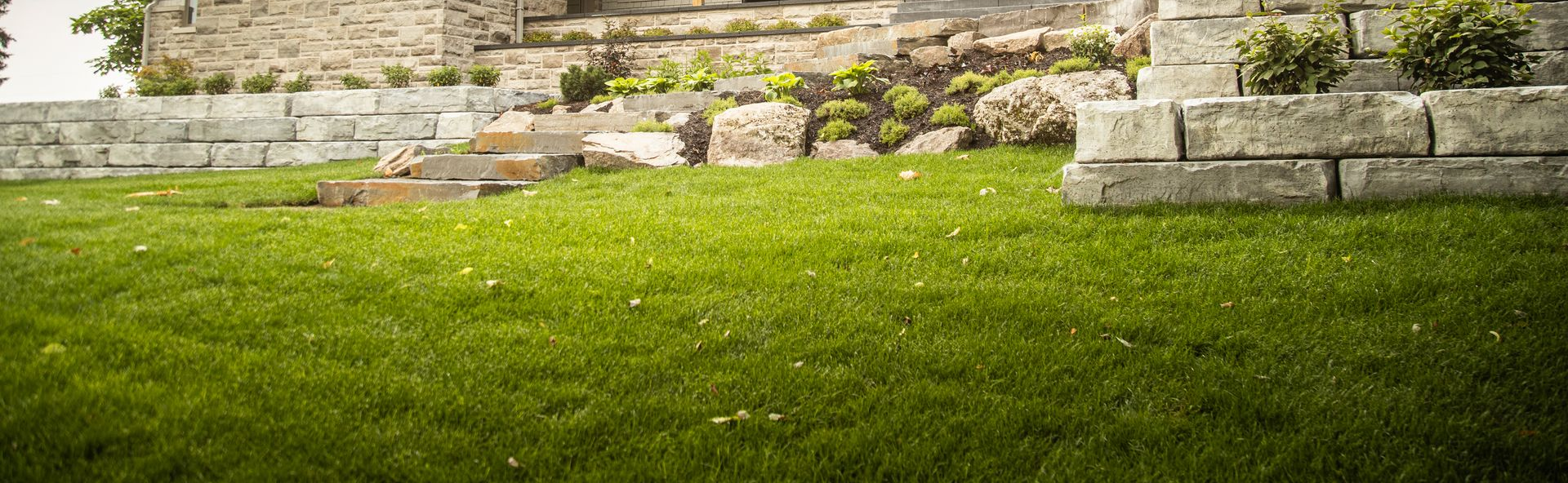
Terraced Walls: A Solution for Steep or Multi-Level Yards
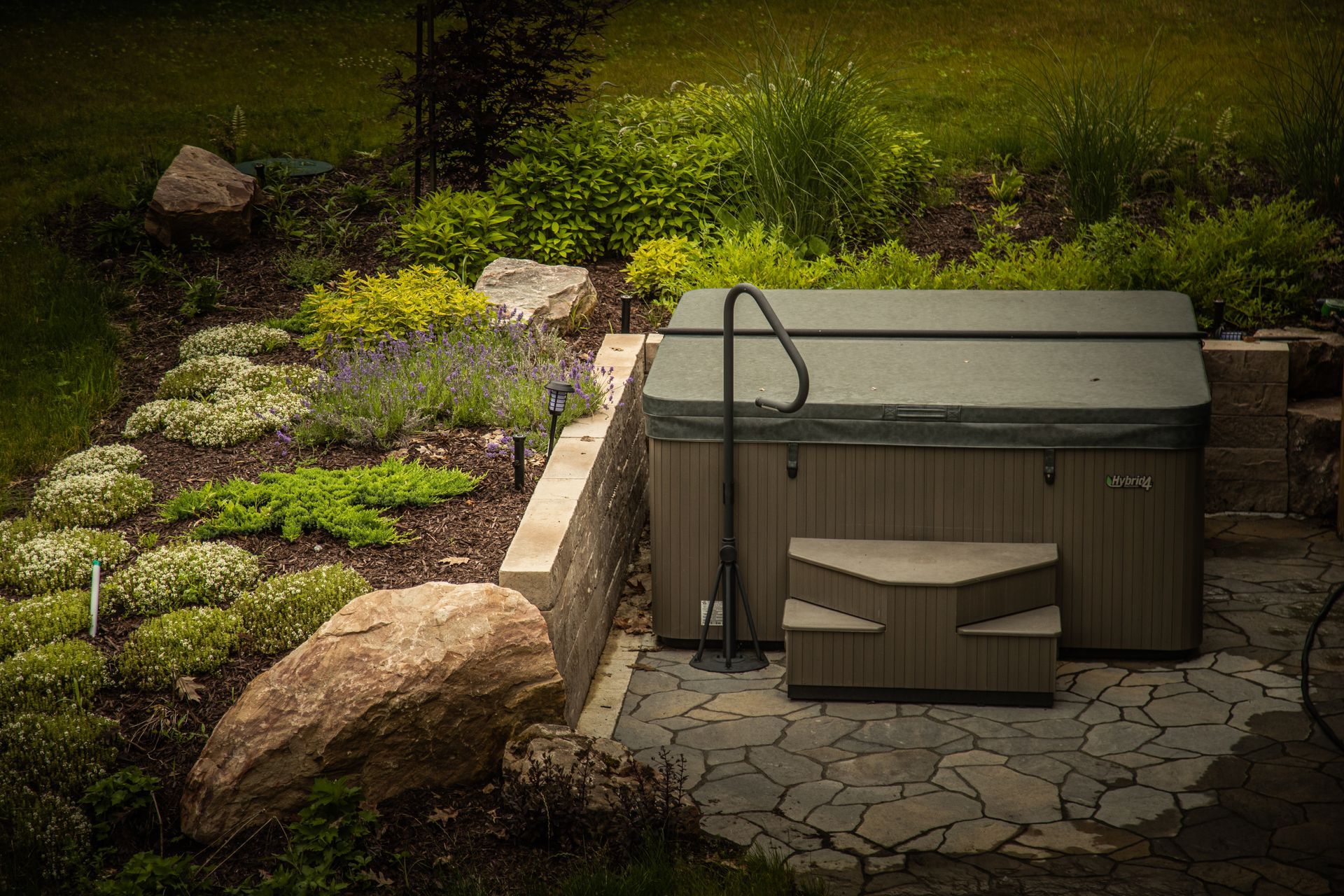
When a yard has significant elevation change, terracing may be the best approach. This involves building multiple smaller retaining walls rather than one tall structure.
Benefits include:
- Reduced pressure on individual walls
- Better drainage
- Multiple usable spaces
- More appealing visual design
Terracing is ideal for properties that need garden space, seating areas, or pathways on different levels.
Supporting Soil and Plant Health
Retaining walls not only stabilize soil- they support long-term planting success. Integrating vegetation into the design helps reduce surface erosion and improve aesthetics. Canadian erosion-control resources highlight how vegetation and structural solutions work together on sloped terrain (Retaining Wall Repair Canada).
Plantings can be added above the wall, along terraced levels, or incorporated in pockets where appropriate. For homeowners comparing different retaining wall materials and design options, our
detailed guide on retaining wall styles and costs offers a broader overview before starting a project.
When a Retaining Wall May Be Needed
You may benefit from a retaining wall if you notice:
- Soil sliding or washing out
- Pooling water on one side of the yard
- Soil pushing against walkways, steps, or the foundation
- Difficulty maintaining the slope
- A desire for more usable outdoor space
A site visit will confirm whether you need a single wall, a terraced system, or a combination of grading and drainage improvements. Book yours today.
Why Professional Installation Matters
Retaining walls must withstand lateral pressure, soil movement, water load, and seasonal changes. Professional installation ensures:
- Proper compaction
- Correct setback
- Adequate drainage
- Material longevity
- Structural integrity
- Compliance with safety standards
A retaining wall is an investment in both function and long-term stability- one that pays off when built correctly.
Sloped yards can be difficult to manage, but the right retaining wall design can completely reshape how you use your outdoor space. Whether you’re dealing with erosion, poor drainage, or simply want more functional room for living and landscaping, a well-built retaining wall is a reliable and long-lasting solution.