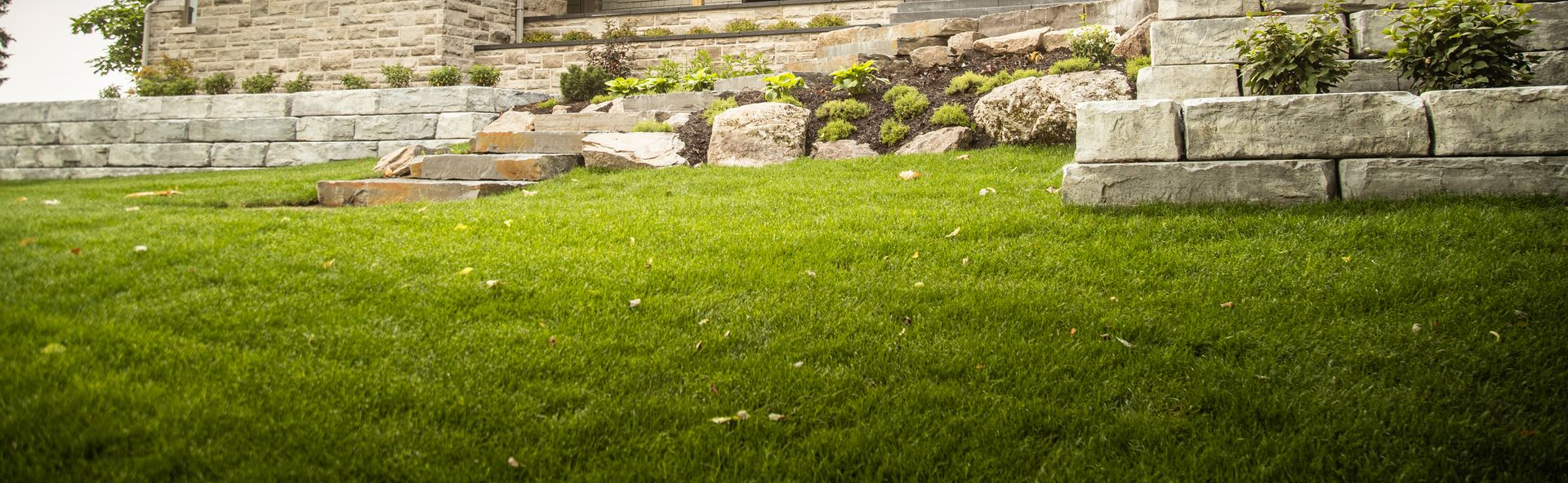
New Build Landscaping in Kingston: Where to Start With a Bare Lot
Moving into a new build is exciting. Then you look out the back window at a yard of mud, a few patches of builder sod and a grading slope you did not choose. It is tempting to start on the patio right away, but the order you do things in matters a lot on a brand new lot. Here is where we suggest starting.
Start With the Grading Plan, Not the Patio
Every new subdivision lot in Kingston and the surrounding townships is built to a grading plan approved by the municipality. That plan sets how water moves across your yard and your neighbours' yards, including the shallow swales along the side and back lot lines. Your builder is responsible for meeting it.
Before you change anything, ask your builder for a copy of the approved grading plan for your lot. Filling in a swale or building a raised garden in the wrong spot can send water toward your foundation or onto the lot next door. Tarion also warns that homeowner changes to the builder's grading can lead to problems that are not covered by your new home warranty.
Expect the Ground to Settle
The soil dug out for your basement gets pushed back against the foundation once the walls are up. That backfill settles over the first year or two, especially after the first winter and spring thaw. Tarion's own guidelines note that settlement under walkways and driveways is not covered by warranty.
That does not mean you have to wait years for a patio. It does mean any hardscaping close to the house needs a properly compacted base, and in some spots it is worth giving the ground a season to settle first. Low spots that appear against the foundation should be topped up so water keeps moving away from the house.
Check What Is Under the "Topsoil"
New lots are often finished with a thin layer of topsoil over heavy clay, compacted fill and leftover construction debris. Sod laid on that will struggle, and gardens will drain poorly. Dig a few test holes before you plant anything. If you find only a few centimetres of good soil, adding more is one of the best investments you can make. Our post on why soil matters explains more.
Know What Is Buried and Where You Cannot Build
Your survey will show any easements on the lot. Utility and drainage easements are common along the back and sides of newer lots and can limit what you put there. Before any digging, request a free locate through Ontario One Call so you know where gas, hydro and communication lines run.
Watch the Yard Through a Few Rainstorms
Some of the most useful planning costs nothing. After a heavy rain, walk the yard and note where water sits, where it runs and where downspouts empty. Those notes make it much easier to place a patio, choose planting spots and decide if any drainage work is needed. Our guide to why yards hold water in spring covers the common causes.
Plan the Whole Yard, Then Build It in Phases
New homeowners rarely want to do everything at once, and they do not have to. A simple plan for the whole property lets you build one piece at a time without having to tear anything out later. A typical sequence looks like this:
- First: fix any grading issues, finish the soil and lay sod so the mud is under control
- Next: add the walkway, patio or driveway work you use every day
- Then: planting, privacy screening and garden beds
- Finally: lighting and finishing touches
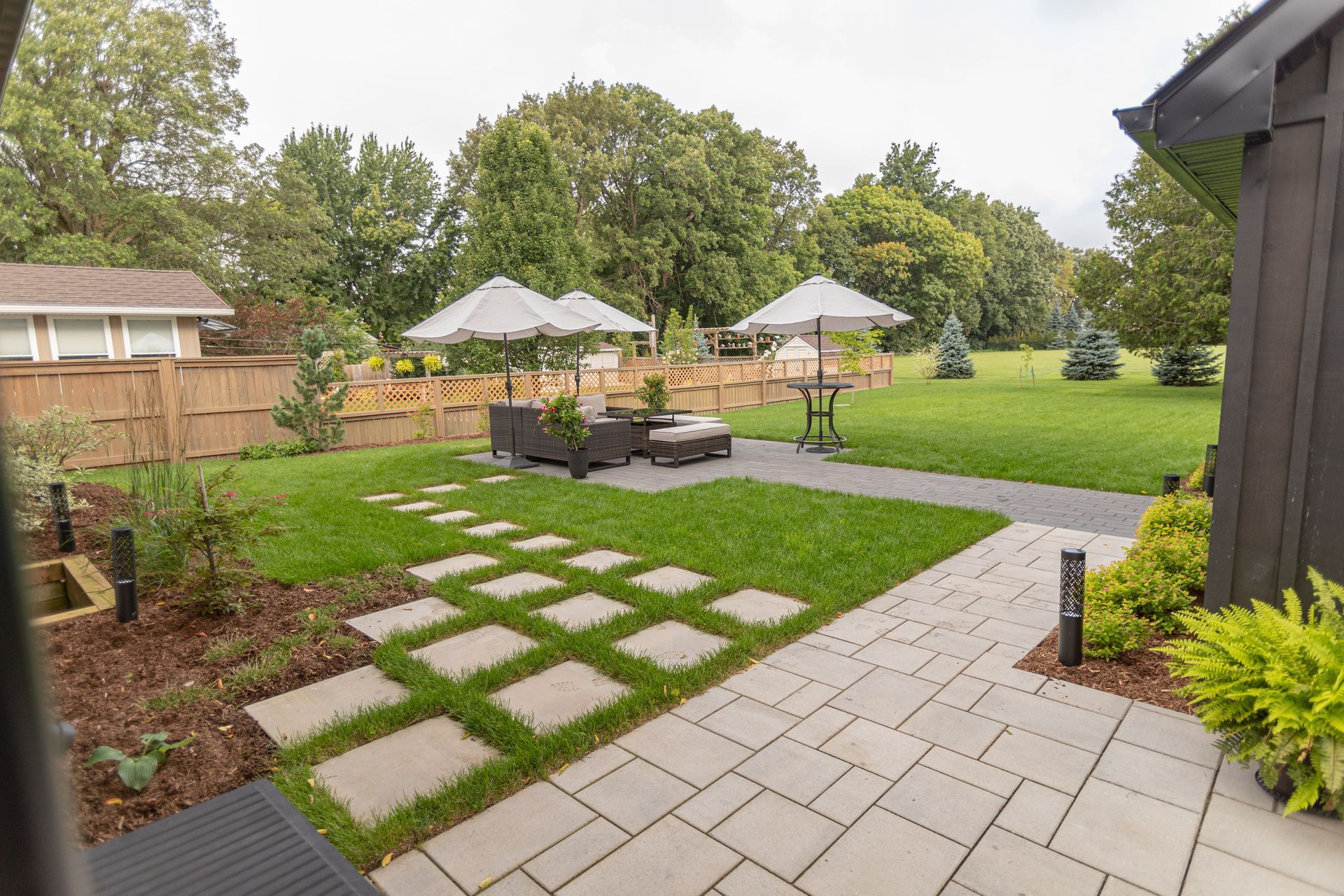
Planning the whole yard first also means sleeves for lighting wires, drainage pipes and future gas lines can go in before the patio, instead of cutting into it later.
Privacy Usually Comes Up Fast
New subdivisions tend to have small trees and open sightlines, so privacy is often the first thing people notice once they start using the backyard. Planting takes a few years to fill in, so it pays to get trees and hedges in early. Our post on creating backyard privacy without a fence has ideas that work well on newer lots.
How We Help With New Build Yards
We work with homeowners in newer neighbourhoods across Kingston, as well as in Amherstview, Bath and Odessa. We start with a site visit to look at grading, soil and drainage, then put together a plan you can build all at once or in stages.
Just moved in? Fall and winter are the best times to plan, so you are first in line when spring arrives. Get in touch and we will come take a look.